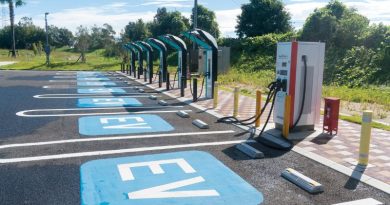
How to budget for EV infrastructure in commercial projects

Electric vehicles are transitioning from a niche category into a central component of modern transportation. For commercial developers, property owners, and project planners, this shift is reshaping expectations around infrastructure. Businesses that once viewed charging stations as optional amenities now recognize them as strategic assets. Office parks, retail centers, multifamily developments, and hospitality properties are increasingly judged by their readiness to support electric mobility. As adoption accelerates, planning for EV charging becomes a critical part of budgeting and long term asset management.
Commercial real estate investors are paying close attention to the evolving needs of tenants and visitors. Companies are incorporating sustainability commitments into their operational strategies, and providing EV charging supports these initiatives. At the same time, customers are beginning to expect convenient access to charging while they shop, work, or travel. Failure to provide that infrastructure can place a property at a competitive disadvantage. Budgeting for EV charging therefore requires not only financial foresight but also a strategic understanding of market expectations.
The planning process typically begins during early project design, when electrical capacity, site layout, and parking allocation can still be optimized. Developers who integrate charging infrastructure from the outset often reduce long term costs and avoid expensive retrofits. They can also design systems that scale as demand grows. This forward looking approach allows commercial properties to adapt to rising EV adoption without repeated construction disruptions. Thoughtful budgeting ensures that EV infrastructure becomes a durable and profitable component of the property rather than a reactive expense.
Understanding the Core Cost Components of EV Charging Projects
The budget for EV infrastructure is shaped by several major cost categories. Hardware represents the most visible component, including Level 2 chargers or DC fast charging equipment depending on the use case. Installation costs often rival the hardware expense, particularly when trenching, electrical upgrades, or transformer installations are required. Site preparation, permitting, and engineering design also contribute meaningfully to the total project cost. Developers who underestimate these supporting elements frequently encounter unexpected overruns.
Electrical capacity plays a particularly significant role in determining cost. Many commercial sites were not originally designed to support multiple high power chargers. As a result, upgrading panels, transformers, or utility connections may become necessary. These upgrades can involve coordination with local utilities, which introduces additional timelines and expenses. Accurate budgeting therefore requires a detailed electrical assessment early in the planning phase.
Selecting reliable equipment is another factor that influences both upfront investment and operational stability. Commercial grade charging equipment varies widely in durability, modularity, and power capability. Companies such as ChargeTronix provide a range of AC and DC charging solutions designed for commercial environments, emphasizing reliability and flexible system architecture. This cost analysis article, published on their blog, examines equipment pricing, installation factors, and power infrastructure requirements for commercial projects.
Evaluating Site Conditions and Electrical Capacity
Every commercial property presents unique physical and electrical conditions that shape infrastructure costs. Parking layouts determine how easily chargers can be integrated into existing spaces. Surface lots may require trenching to run conduit beneath pavement, while structured parking garages introduce challenges related to cable routing and load distribution. These physical constraints can influence installation complexity and should be carefully evaluated before finalizing a budget.
Electrical infrastructure is often the most critical limiting factor. The available capacity within a building’s electrical service determines how many chargers can operate simultaneously without system upgrades. Developers must analyze current loads from lighting, HVAC systems, elevators, and tenant operations. If the property’s electrical service is already near capacity, significant upgrades may be required. Such improvements can involve new transformers, service panels, or even utility level infrastructure.
Utility coordination also introduces timing considerations. In some regions, power providers must conduct grid assessments before approving major capacity increases. These reviews can extend project timelines and require additional engineering documentation. A comprehensive feasibility study conducted during the early planning stage can identify these constraints and allow developers to incorporate realistic costs into the budget. Proper due diligence reduces financial surprises and ensures that EV infrastructure integrates smoothly with existing building systems.
Selecting the Right Charging Technology for Commercial Use
The choice between Level 2 and DC fast charging equipment significantly affects project economics. Level 2 chargers typically deliver between 6 kW and 19 kW of power and are well suited for locations where vehicles remain parked for several hours. Office buildings, hotels, and multifamily residences commonly rely on this technology. These units are generally less expensive to install and require lower electrical capacity, making them attractive for many commercial budgets.
DC fast chargers operate at much higher power levels, often exceeding 50 kW and sometimes reaching several hundred kilowatts. They are designed for locations where drivers need rapid charging, such as highway corridors, fleet depots, or busy retail centers. The increased power output allows vehicles to recharge significantly faster, but it also demands stronger electrical infrastructure. As a result, both hardware and installation costs are substantially higher than Level 2 systems.
Commercial developers must align charger selection with expected usage patterns. Installing high powered equipment in locations where vehicles remain parked for long periods may produce unnecessary costs. Conversely, slow charging in high traffic environments can lead to user frustration and lost revenue opportunities. Careful analysis of dwell time, traffic flow, and target user groups allows project planners to match technology choices with operational goals and financial constraints.
Planning for Scalable Infrastructure and Future Expansion
EV adoption continues to accelerate, and commercial properties must prepare for growing demand. Budgeting for scalability is therefore one of the most important strategic decisions developers can make. Installing conduit, electrical capacity, and network infrastructure for future chargers during the initial construction phase can significantly reduce expansion costs later. Even if only a few chargers are installed initially, the groundwork for future deployment can already be in place.
Scalable designs also allow property owners to respond to changing tenant needs. A retail center that installs four chargers today may find demand doubling within a few years. If the underlying electrical infrastructure was designed for expansion, adding additional units becomes relatively straightforward. Without that preparation, the property may face disruptive construction work and costly electrical upgrades.
Modular charging systems offer another advantage in this context. Some modern charger architectures allow a central power cabinet to distribute electricity to multiple dispensers across a site. This design improves efficiency and allows developers to increase capacity incrementally as demand rises. Budgeting for such flexibility may slightly increase upfront investment but often delivers long term savings and operational resilience.
Leveraging Incentives, Grants, and Utility Programs
Government incentives and utility programs play a crucial role in reducing the financial burden of EV infrastructure projects. Many national and regional governments provide tax credits, rebates, or grants designed to accelerate charging deployment. These programs can offset a significant portion of equipment and installation costs. For commercial developers, understanding available incentives can dramatically improve project economics.
Utility companies are also becoming active participants in EV infrastructure expansion. Some offer make ready programs that cover the cost of electrical upgrades required to support charging stations. Others provide favorable electricity rates for EV charging or demand management programs that reduce operational expenses. Developers who engage with utilities early in the planning process often discover opportunities to reduce capital costs.
However, incentive programs frequently come with eligibility requirements and application deadlines. Navigating these processes requires careful planning and documentation. Developers must track program rules, maintain compliance with reporting requirements, and coordinate project timelines with funding schedules. Proper management of these incentives ensures that available financial support is fully captured in the project budget.
Building a Long Term Financial Model for EV Infrastructure
A comprehensive EV infrastructure budget extends beyond installation costs. Long term financial modeling must include maintenance, electricity consumption, software subscriptions, and potential revenue streams. Charging stations require periodic inspection and servicing to ensure reliability. Software platforms that manage access control, billing, and network monitoring also introduce recurring expenses.
At the same time, EV charging can create new revenue opportunities for commercial properties. Property owners may charge users per kilowatt hour, per session, or through subscription models. Retail centers may view charging as a tool for attracting customers who spend more time on site while their vehicles charge. Office buildings can offer charging as a premium amenity that enhances tenant satisfaction and retention.
Successful financial planning balances these costs and benefits over the lifespan of the infrastructure. Developers must consider expected utilization rates, electricity pricing, and equipment lifespan when forecasting returns. A thoughtful financial model allows commercial projects to treat EV charging not simply as an environmental initiative but as a strategic investment that strengthens property value and long term competitiveness.
Also read: Cable theft at EV charging station is a silent threat to India’s clean mobility transition
Subscribe & Stay Informed
Subscribe today for free and stay on top of latest developments in EV domain.