EV Charging Infrastructure is a Critical Component of India’s Energy Security: Kartikey Hariyani

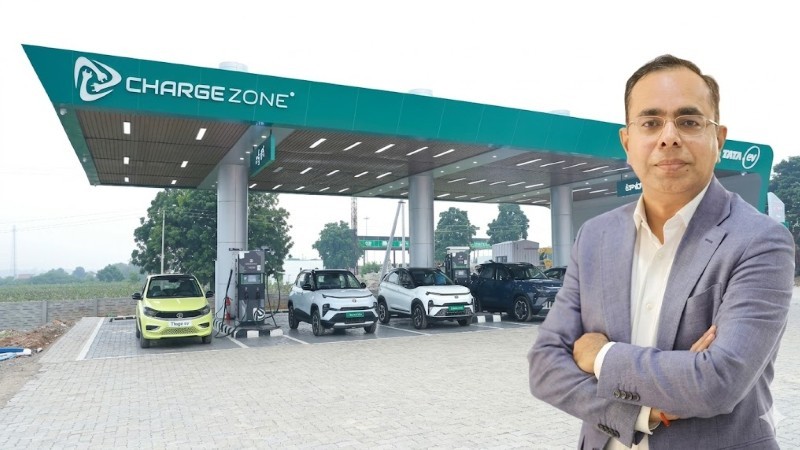
Since 2019, ChargeZone has installed over 15,000 charging points at 1,200 locations. The company plans to reach 1 million charging points by 2030, increasing investments in step with the rising EV adoption. We interviewed CEO Kartikey Hariyani to discuss gaps, goals, and the role of EV charging in India’s energy future.
What are the most critical gaps in India’s public EV charging and operational challenges in running a charging network?
India’s public charging demand is fundamentally shaped by intercity travel, particularly between Tier 1, Tier 2, and Tier 3 cities, where business travel is frequent and regular. Metro users, by contrast, are primarily focused on intra-city commutes. This distinction makes highway charging infrastructure a necessity. Within cities, over 90 per cent of EV charging already happens at home or at the workplace. This figure is even higher outside metros, where independent housing makes private charging far more accessible. Consequently, the real pressure on public charging infrastructure falls along highways and high-traffic inter-city corridors — not within city limits.
The gaps today are less about demand and more about on-ground execution. The primary challenges are land availability, power connectivity, and regulatory clearances.
- Establishing a charging station requires non-agricultural land classification and a reliable electricity supply — processes that involve multiple stakeholders and can significantly extend project timelines. Securing land, ensuring correct land classification, and obtaining electricity connections from local distribution companies remain the primary hurdles.
- A well-functioning charging station requires considerably more than a power outlet. It demands a planned facility with multiple chargers, cross-vehicle compatibility, and access to basic amenities — requirements that grow more critical as EV adoption expands beyond personal cars to include buses and commercial trucks. The mandate is no longer to install chargers; it is to build reliable, high-uptime infrastructure that users and fleet operators can depend on at scale.
On the policy front, the environment is improving. Reforms under the Electricity Act have meaningfully strengthened the economics of charging infrastructure. Nearly 12 states have reduced or eliminated demand charges, which improves station viability and accelerates deployment at scale.
What role is ChargeZone playing in scaling EV adoption across different vehicle segments through its highway charging network?
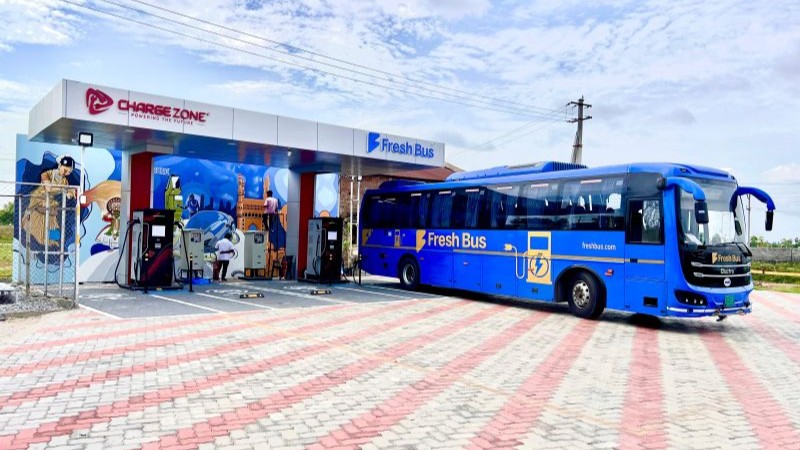
ChargeZone’s core focus is intercity EV travel — building a highway charging network where public charging demand is most concentrated and where the business case is most compelling. The company is expanding across three distinct verticals.
- The first is intercity highway infrastructure, supporting long-distance travel between cities.
- The second is open-access city hubs designed for high-utilisation electric taxi fleets — including Uber and its partners — where uptime and fast turnaround are operationally critical.
- The third is multi vehicle infrastructure that serves personal cars, e-buses, and electric trucks, ensuring the network is built for both passenger and commercial segments as they scale.
These are complementary layers of a network designed to support EV movement at every level, personal, commercial, and fleet.
With nearly 85% of India’s crude oil needs met through imports, electrification is becoming a structural necessity. ChargeZone’s network is built in alignment with this shift, as the backbone that enables confidence in EV adoption across vehicle segments and use cases.
How does ChargeZone plan to support charging infrastructure deployment in residential complexes, office spaces, and other destination charging avenues?
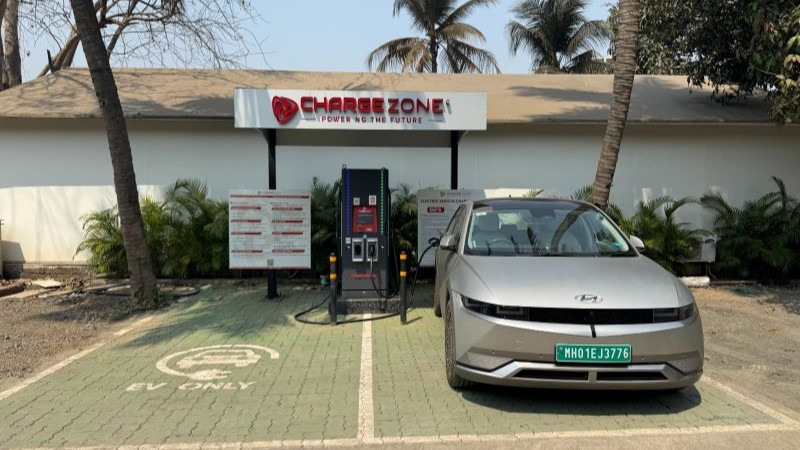
Home and workplace charging remain the foundation of EV adoption — over 90 per cent of charging happens across these two locations, making them the most consequential infrastructure touchpoints in the ecosystem. In Tier 2 and Tier 3 cities, home charging is more accessible given the prevalence of independent housing. In urban centres, however, residential societies and apartment complexes create a structural gap — one that community charging is specifically positioned to address.
ChargeZone is now entering the community charging space, with a focused deployment strategy across residential societies and apartments. This is a priority vertical, directly targeting users who lack access to private home charging and for whom reliable, proximate charging is a prerequisite for EV adoption.
Within cities, fast public charging will continue to serve a limited share of overall demand. Community charging and destination charging are positioned to carry the larger role of supporting the daily charging needs of urban EV users who rely on shared residential infrastructure.
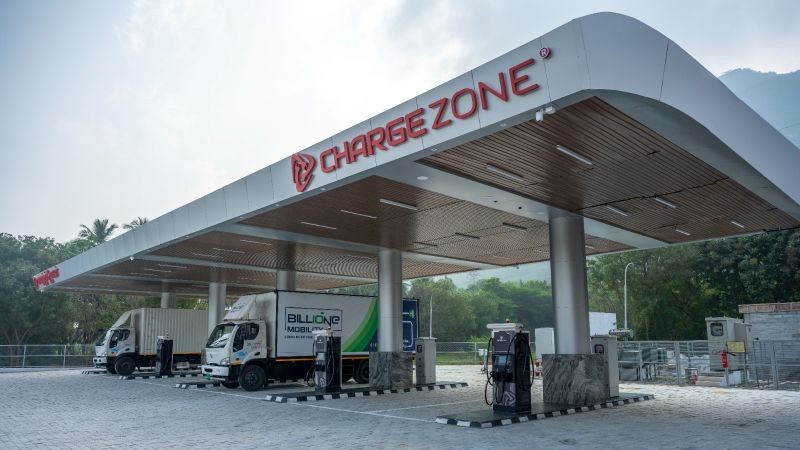
Where does ChargeZone stand on operational profitability? What will it take, and at what utilisation rate, does your large-scale charging network break even?
ChargeZone operates across both personal and commercial mobility segments and has seen strong growth, including triple-digit annual growth in the past year. The company continues to grow double digit. Network utilisation has reached around 12 per cent, which is a meaningful level for this stage of market development. Improved utilisation is driven by better site selection, particularly by co-locating charging stations with existing amenities, which increases customer convenience.
What other revenue streams is ChargeZone exploring at the moment?
ChargeZone is expanding its infrastructure through a Dealer-Owned, Company-Operated (DOCO) franchise model, which allows landowners, entrepreneurs, and institutions to invest in EV charging stations while the company manages development and operations.
The company is also working with financing partners, such as the State Bank of India, through structured schemes to support investment in charging infrastructure. Its upcoming supercharging network will include high-capacity stations from 500 kW to 1.5 MW, supported by renewable energy integration and battery storage under initiatives like Project E DHARA. This approach supports long-term scalability and operational efficiency across the network.
India’s power sector is increasingly shifting towards renewable energy, but the mobility sector relies heavily on imported fuels. What is the economic and energy security impact of this situation?
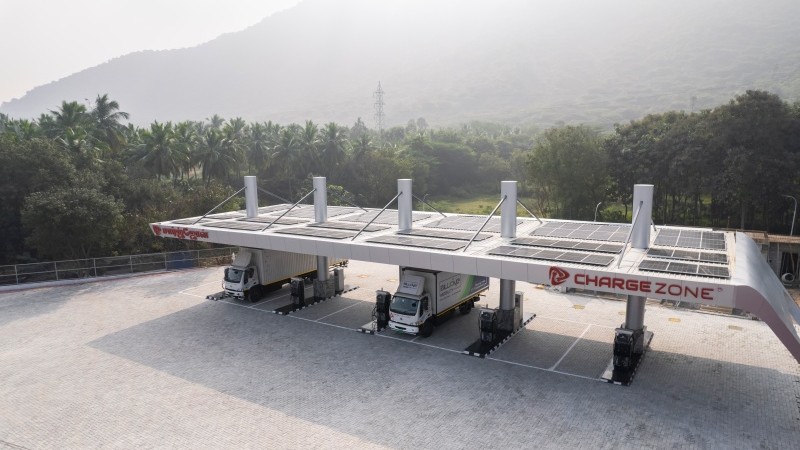
This is not purely an energy transition question; it is an economic resilience question. India’s continued dependence on imported crude and natural gas means that global price shocks and geopolitical disruptions translate directly into domestic consequences: a widening import bill, pressure on the current account, and broader inflationary impacts. A $10 rise in crude prices alone can materially widen India’s current account deficit. The stakes are amplified by the fact that transport remains one of the largest end-uses of oil in the country.
Expanding renewable power capacity, while necessary, is insufficient on its own. Real energy security requires that the transition extend into mobility, where the dependence on imported fuels has historically been most acute. India’s non-fossil capacity has reached 283.46 GW, with more than half of installed electricity capacity now sourced from non-fossil fuels. The logical and necessary next step is to make that domestically generated energy usable on the road, at scale.
Every intercity EV corridor that is made reliable reduces India’s dependence on imported fuels in the segment of the economy that has relied on them most. For ChargeZone, this is the core of the opportunity, building highway charging networks that do not merely support EV adoption, but actively strengthen India’s shift towards cleaner, domestically anchored mobility.
This interview was first published in EVreporter May 2026 magazine.
Also read: Charge Zone announces project E-DHARA for renewable-powered EV charging
Subscribe & Stay Informed
Subscribe today for free and stay on top of latest developments in EV domain.