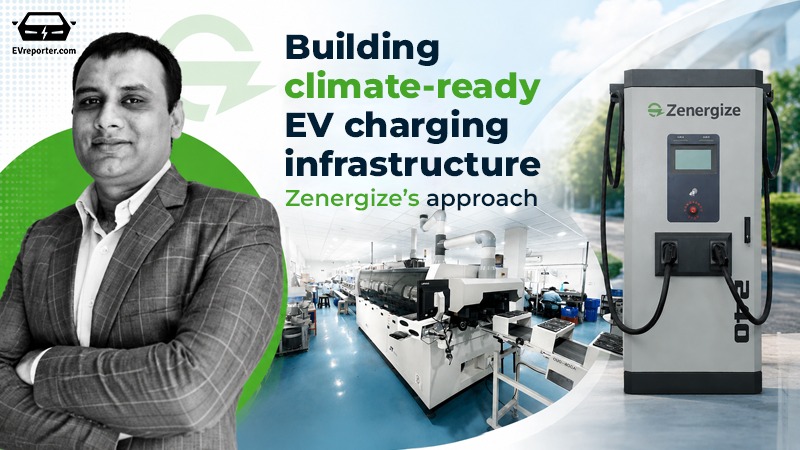
Zenergize’s Approach to Building Indian Climate-ready EV Charging Infrastructure

As electric vehicle adoption grows in India, the focus on reliable and climate-resilient charging infrastructure is becoming increasingly important. In this interview, Navneet Daga, Co-founder & CEO, Zenergize, discusses the company’s approach to developing indigenous EV charging technology, the challenges posed by India’s high-temperature operating conditions, and the role of Silicon Carbide-based systems in improving charger efficiency and uptime. He also shares insights into Zenergize’s product portfolio, manufacturing capabilities, and growth plans for the current financial year.
The pitch says Zenergize is India’s first and only 100% indigenous EV charger manufacturer. Can you please share information to support this statement, as many other charger OEMs also claim to supply made-in-India products?
To understand this claim, it helps to look at how an EV charger is actually built.
The technology stack goes from power conversion modules and controllers all the way through to the assembly and the software that runs the system. Most players operating in India today are only present at the last two steps: they import the core components and then assemble the final product here. The software layer sits on top of that. This is not the same as building the technology.
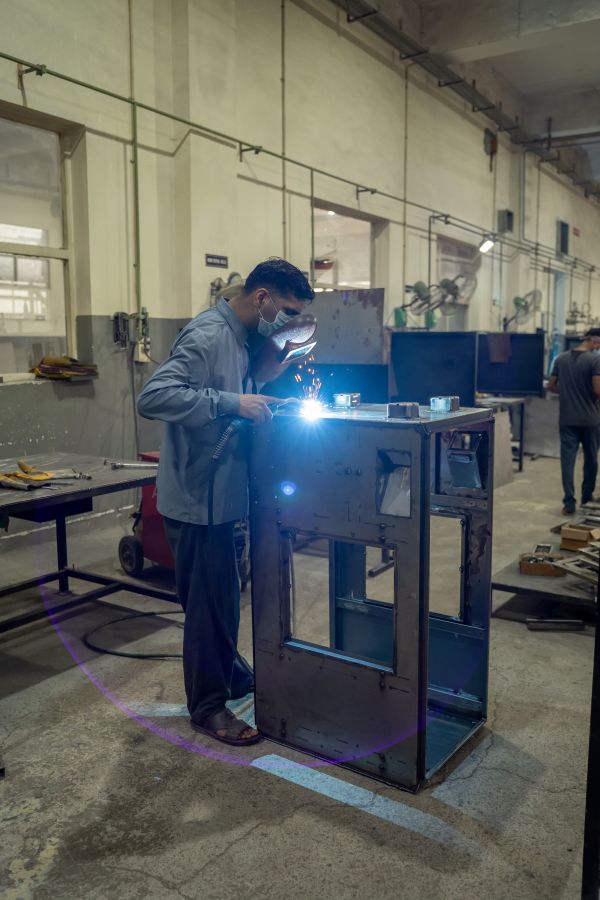
At Zenergize, we have developed and own the intellectual property across the entire chain, from power-stage design and PCB layout to firmware, control algorithms, and thermal engineering. We also manufacture critical components, such as inductors and heat sinks, in-house. The only part of the chain we do not operate in is the semiconductor wafer level, which is capital-intensive and not yet viable domestically.
This distinction matters for a simple reason. When you only assemble, the value addition happening in India is minimal, and you remain dependent on imports for the parts that actually determine performance. True self-reliance, in the spirit of what Atmanirbhar Bharat calls for, means owning the technology, not just the final step of putting it together.
Is India’s EV charging infrastructure built for high temperatures of 45-50°C? What are the shortcomings of the current infrastructure with respect to heat tolerance?
The more fundamental issue is that most of the charging infrastructure deployed in India today was designed for climatic conditions in Europe or North America, where temperatures are far more moderate. In power electronics, components generate significant heat during operation. When you take equipment built for a mild climate and deploy it in India’s harsh summers, where temperatures regularly cross 45 to 50 degrees Celsius, the gap between design assumptions and real-world conditions becomes a serious problem.
This often leads to derating, where chargers automatically reduce output power to protect internal components, or in some cases, shut down entirely. The impact is immediate, leading to slower charging speeds, reduced uptime, and a compromised user experience.
Effective heat management requires deliberate architectural choices from the outset, including semiconductor selection, thermal pathways, mechanical design, and airflow optimisation. Without these considerations being built into the system design, thermal stress quickly becomes a limiting factor in real-world deployments. This is why we build our chargers on Silicon Carbide, or SiC. SiC is considerably more heat-resistant than conventional technologies and converts power more efficiently, meaning it generates less heat in the first place.
Does India risk large-scale charging disruptions if infrastructure is not climate-adapted? What needs to change, from technology choices to policy thinking, to avoid this becoming a larger systemic issue?
Charging infrastructure forms the backbone of EV adoption, playing a critical role in ensuring the reliability, efficiency, and long-term sustainability of electric mobility. For personal vehicles, range anxiety is the single biggest reason people hesitate to switch to electric. Charging uptime and fast charging capability determine how many hours a vehicle can earn revenue. Poor charging infrastructure is not just an inconvenience for a fleet operator, it directly hits asset utilisation and makes the EV business case hard to sustain. In short, reliable charging is a make-or-break factor for a profitable EV business, not just for individual users but for the entire ecosystem.
Addressing this challenge requires a multi-pronged shift. At the technology level, products must be designed & built specifically for Indian climatic conditions from the outset, rather than looking back. This includes designing for higher thermal thresholds, grid variability, and intensive usage cycles typical of real-world deployments.
At the policy level, there is a need to move beyond deployment-focused targets and place greater emphasis on performance-driven standards. Parameters such as uptime, thermal operating range, and resilience to grid fluctuations should be integral to finding bases and structures.
Ultimately, the focus must evolve from simply increasing the number of installed chargers to increasing the number of working chargers and ensuring they deliver strong, reliable performance in everyday use.
Zenergize is building SiC (silicon carbide)-based EV chargers and inverters. How does this capability translate into better-suited chargers for India?
Silicon Carbide (SiC) represents a significant advancement over conventional IGBT technology, delivering higher efficiency and superior thermal performance.
The most important practical difference is efficiency. SiC-based systems convert a greater proportion of input power into usable output, operating at efficiencies of 97 to 98.5%. Every percentage point of efficiency gained is power that is not wasted as heat.
This matters enormously in practice. Higher efficiency means the charger generates less heat internally, and less heat means components last longer and performance stays consistent over time. In a high-utilisation environment, such as a commercial fleet depot or a highway charging station, this directly translates into lower energy costs and better uptime throughout the system’s lifecycle.
Another advantage of SiC is its thermal recovery. SiC devices cool down faster after high-load cycles, which is important when chargers are running almost continuously. This reduces the risk of heat accumulation during extended operation, a challenge conventional technology struggles with in India’s climate.
Can you also share the Zenergize product portfolio? And which auto OEMs/ CPOs are you working with?
Our product portfolio today spans EV charging and adjacent power electronics systems.
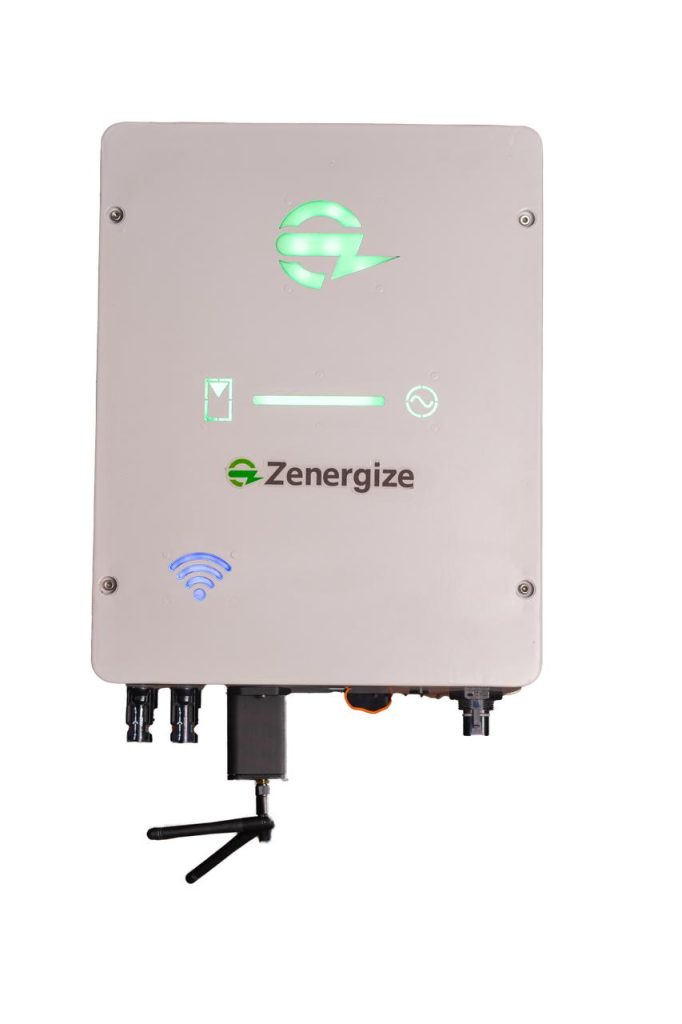
On the EV side, we offer both AC chargers and DC fast chargers designed for a range of use cases, from residential and commercial deployments to fleet and high-utilisation environments. Our chargers are OEM-agnostic, meaning they support the standard protocols used across the industry: CCS2 for DC fast charging and Type 2 for AC charging. These systems are built on proprietary power converter architectures with integrated safety systems and intelligent control layers. In addition, we are also building solar inverters, reflecting our broader focus on power electronics across the EV and renewable ecosystem.
Regarding customers, we are working with a mix of fleet operators, bus OEMs, and charging point operators. Many of these are customers who have already experienced the limitations of imported systems and are now prioritising reliability, uptime, and domestic support capability in their infrastructure decisions.
What is the current scale of operations at Zenergize in terms of production capacity and team size? Please also give an idea of your R&D and manufacturing setup and locations.
We have built Zenergize as a deep-tech company with a strong focus on in-house engineering and manufacturing capability.
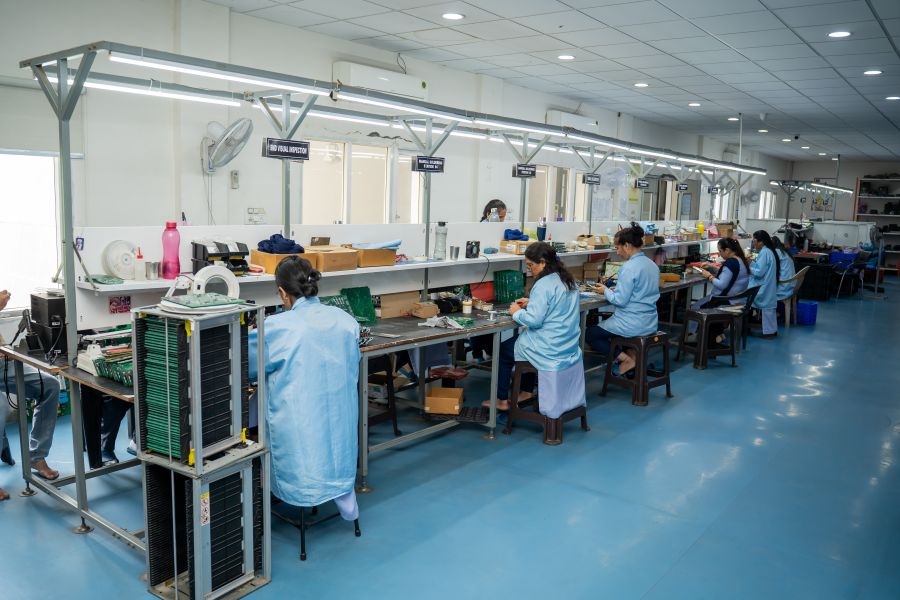
Our core team spans power electronics, firmware, thermal engineering, and mechanical design, allowing us to develop and iterate on products entirely in-house. This integrated approach is central to maintaining performance and reliability. On the manufacturing side, we follow a hybrid model. We design and manufacture critical components in-house where performance control is essential, while also working closely with domestic vendors for components where strong local capability exists.
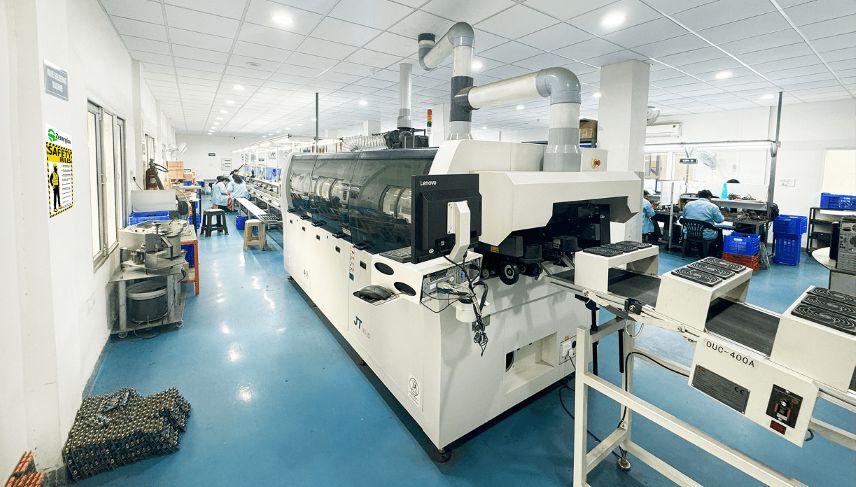
Our R&D and manufacturing operations are both based out of our facility in Parwanoo, Himachal Pradesh. Our R&D and product development efforts are tightly integrated with manufacturing, ensuring that design decisions translate effectively into real-world performance. We currently have a production capacity of 10,000 inverters and 400 DC chargers per month. As demand scales, we are continuing to expand both our production capacity and engineering team in line with market needs.
How was the last FY for you in terms of business expansion, and what are your goals for the current FY?
The last financial year has been focused on building a strong foundation, both in terms of technology and market presence.
We have seen encouraging early demand, particularly from customers who are operating at scale and are deeply focused on uptime and total cost of ownership. We head into FY27 with a confirmed order pipeline of Rs. 40 to 50 crore, which reflects the validation we are seeing for our approach of building products specifically engineered for Indian conditions.
For the current financial year, our focus is on three fronts. First, scaling deployments and deepening partnerships with OEMs and charge point operators. Second, continue building out our service network so customers have reliable on-the-ground support wherever our systems are deployed. And third, expanding our product line to include three-phase and hybrid inverters, which extend our capabilities across a broader set of applications in the EV and renewable energy spaces.
The broader goal is to move from early adoption to meaningful market penetration, while building the kind of technology-led organisation that can support India’s charging infrastructure at scale over the long term.
Also read: EV charger manufacturer Zenergize raises USD 2 million in seed round
Subscribe & Stay Informed
Subscribe today for free and stay on top of latest developments in EV domain.