Converting ICE Vehicles to EVs Through Retrofit Solutions | Folks Motor

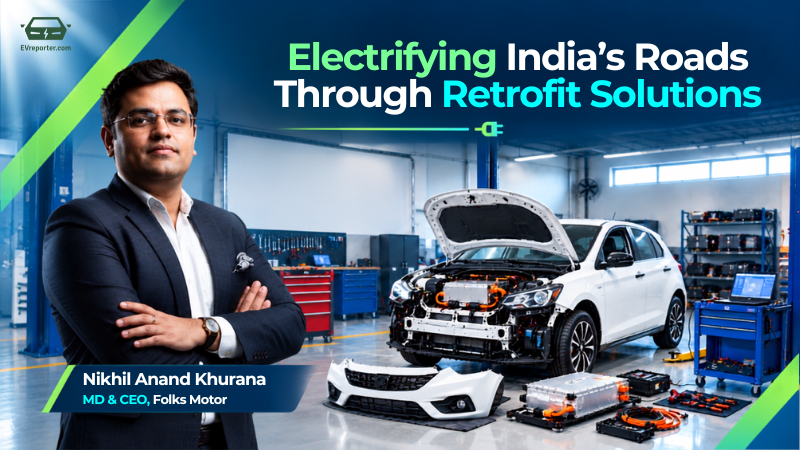
Folks Motor is a Delhi-NCR-based automotive retrofitment solutions provider. This conversation with Nikhil Khurana, MD, Folks Motor explores their work in the electric mobility landscape.
Can you share an overview of the retrofit work carried out by Folks Motor?
We electrofit the existing vehicle fleet through three linked verticals: xEV retrofitting, EV technology and component distribution, and system integration for OEMs and mobility players.
Our retrofit solutions integrate electric powertrains, energy storage and control systems into suitable vehicles, offering an alternative to buying new EVs. Alongside this, Folks Motor supplies critical EV subsystems across the wider supply chain.
Which vehicle categories are currently being targeted for retrofit solutions?
Our retrofit focus spans passenger cars, three-wheelers, light commercial vehicles, buses, and other commercial and fleet vehicles, though which platforms we take on always comes down to technical suitability first. The technology and component side of the business casts a wider net, covering EV and mobility applications generally, wherever individual systems or components can be supplied or integrated for OEMs and manufacturers.
We’ve crossed 250 retrofits so far, spread across pilot projects and B2B fleet deployments across several vehicle categories. Most of these have run as structured pilots or fleet applications, aimed at validating the technology under real conditions, working out the actual total cost of ownership, and understanding how different duty cycles affect performance.
The category-wise breakdown:
- Passenger Vehicles (4W): 150 vehicles
- Three-Wheelers: 50 vehicles
- Light Commercial / Commercial Fleet Vehicles: 50 vehicles
How do the economics of retrofitting a four‑wheeler compare to purchasing a new EV? How much would it cost the customer?
For a passenger car, customers can expect to pay somewhere in the INR 2.5-7 lakh range, with the exact figure shifting based on the vehicle itself, the battery configuration, the powertrain architecture and how it is being used. That economic case gets a lot stronger for high-utilisation vehicles and fleets. Depending on usage patterns, fuel prices and the specific configuration, running costs can drop by roughly 60-70%.
For fleets running high daily mileage, we’re targeting a payback window of around 18-24 months, though the real number will always depend on the vehicle, km covered, prevailing fuel prices and how the vehicle is actually operated.
Could you share the cost breakdown of the retrofit kit and associated installation charges?
The final price is specific to each vehicle, since it covers the electric powertrain, battery system, control electronics, the mechanical and electrical integration work, installation, calibration, testing and everything else that goes into the retrofitment service. We look at this as a complete vehicle-level solution rather than an aftermarket kit sold on its own.
On the technology-distribution side of the business, the commercial arrangement can also work differently; we’re able to supply individual systems or components to OEMs and other manufacturers based on what they specifically need.
What parameters make a specific vehicle a good candidate for retrofit by Folks Motor?
Before any vehicle is taken on, it goes through a detailed technical feasibility assessment. We look at the make and model, the condition of the chassis and structure, how the engine and transmission are set up, how much packaging space is actually available, kerb weight, the electrical architecture, the state of the braking and suspension systems, maintenance history, how much useful life the vehicle has left, and how heavily it’s used day to day.
Generally, the strongest case, both technically and economically, comes from a structurally sound vehicle that still has significant life left in it and sees high daily utilisation.
Please tell us more about your retrofit kit, what components are included?
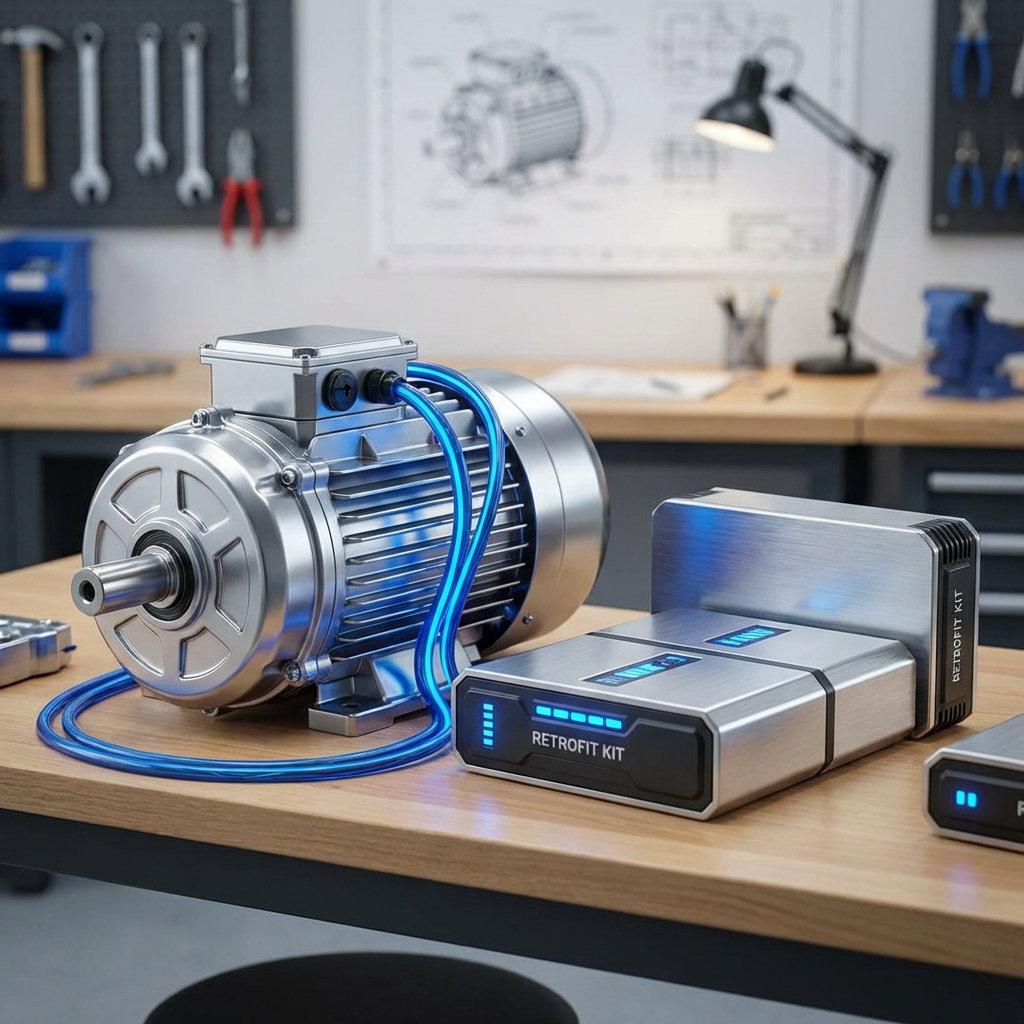
Our retrofit platform is one integrated xEV powertrain, not a single bolt-on part. Depending on the vehicle, that can mean a traction motor, controller/inverter, battery pack and BMS, electric vacuum pump, retrofit gearbox, XCU, DC-DC converter, charging interface, wiring and electrical protection, plus the mechanical and electronic pieces that tie it together.
Can you walk us through a step-by-step process of retrofitment starting from the moment a vehicle arrives at your facility?
- It all starts with an inspection and technical feasibility assessment, checking the vehicle’s mechanical, structural and electrical condition to confirm it’s fit for retrofitment.
- Once that clears, we lock in the right powertrain, battery and control-system setup, prepare the vehicle, and fit the electric powertrain along with everything it needs to run.
- From there, it moves into integration, calibration and testing: powertrain, electrical systems, braking, safety, overall performance- all checked. For B2B and fleet customers, we don’t stop there; we keep tracking real-world performance and feed that back into improving the platform.
What kind of homologation or third-party certifications does the Folks Motor retrofit kit currently hold?
ARAI, the Automotive Research Association of India, is our key technical partner, handling the design, engineering and validation of our retrofit platform. Approvals are configuration- and vehicle-specific, so testing, approval and registration requirements shift with each deployment, and we follow the applicable regulatory framework.
How does Folks Motor support customers with after-sales service following retrofitment?
We provide technical support, diagnostics, servicing and maintenance for the retrofit system, and for B2B fleets, we also focus on operational monitoring and performance feedback. Our xEV Hub vision brings together retrofitment, charging, diagnostics, fleet support and other mobility services under one roof to build a stronger ownership and service ecosystem around electrified vehicles.
Please share your current manufacturing setup for retrofit kits including location and production capacity.
We’re building our manufacturing and engineering capability around a scalable xEV systems platform, combining in-house systems integration with a distributed supply chain for critical components.
We work with specialised suppliers where it makes sense, while keeping vehicle assessment, system architecture, integration, controls, software and high-voltage safety in-house. Our technology-distribution business also lets us procure and supply EV systems and components for wider OEM and mobility applications.
As adoption grows, we plan to scale up manufacturing capacity, localisation, integration capabilities and our network of trained retrofitment centres; domestic value addition is central to that.
Also read: Musashi India signs LOI with Kinetic Green for 2W EV powertrain supply
Subscribe & Stay Informed
Subscribe today for free and stay on top of latest developments in EV domain.