No room for downtime: What most demanding EV use cases tell us about the state of electrification

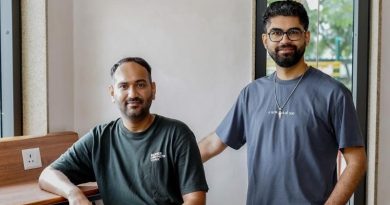
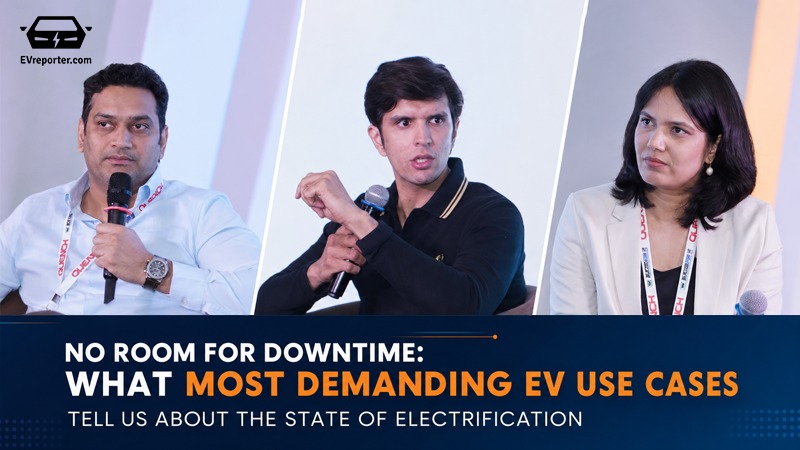
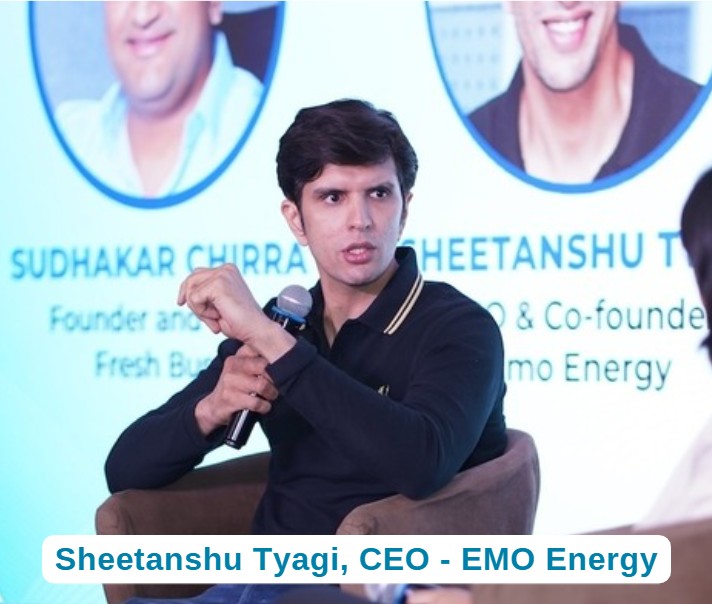
The most revealing marker of EV adoption is when commercial operators stake their businesses on them. Sudhakar Chirra (Founder & CEO at Fresh Bus) is running electric intercity buses. Sheetanshu Tyagi (CEO & Co-Founder, EMO Energy) is building the battery and charging infrastructure that keeps quick commerce delivery fleets running through the day. Their use cases couldn’t be more different — large form factor, long-distance versus small form factor, short, intense loops — but both are stress-testing electric vehicles in the real world. Here is what they had to say at Electricon 2026.
The unit economics of intercity electric buses
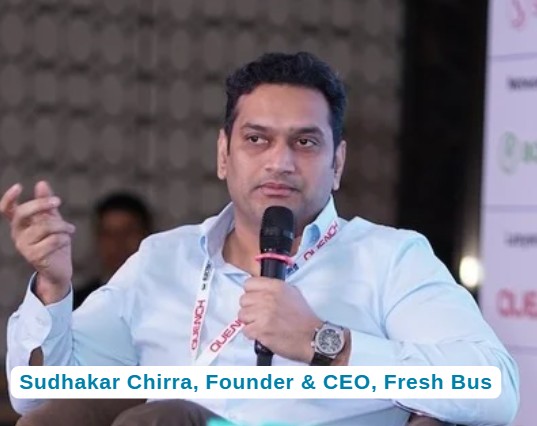
Fresh Bus operates intercity electric buses across India, using 420 kWh battery packs that deliver ~ 1 kWh per kilometre. At 80% usable capacity, each bus can cover 350–360 km on a single charge. The critical number Fresh Bus arrived at for the business case to work is 650 km per day, which allows full asset recovery in 41 months.
The Bangalore–Tirupati route (290 km each way) is the flagship example, where buses charge at each end and run two round-trips daily, with 12 buses running 14 trips per side.
Why large private operators are not yet electrifying?
Despite a stark cost differential — diesel costs ₹7.5–8 lakh per bus per month on a Bangalore–Tirupati route versus just ₹1.5 lakh for electric — large private operators have not made the switch. Sudhakar attributes this to two structural barriers:
- Financing gap: India’s intercity bus industry has 3,800 operators, all highly fragmented and regional. Historically, operators raised 100% of the debt from banks against chassis and body costs, with no equity required. EVs require at least 20% equity margin, and banks ask for more and don’t yet know how to underwrite the asset.
- Upfront infrastructure cost: Setting up a high-speed charging station (example 240 kW) along with a 1,250 kW transformer and power deposit costs approximately ₹4 crores. An operator needs stations at both ends of every route before they can run a single bus. Small operators cannot absorb this, and banks won’t fund it.
The captive charging model and how it evolved
In 2023, public charging infrastructure at 60 kW was too slow — it would take 7 hours to charge a 420 kWh bus. Fresh Bus initially built its own captive charging stations across Bangalore, Tirupati, Hyderabad, Vijayawada, and Visakhapatnam. However, the utilisation of captive infrastructure was only 30–32%, making it capital-inefficient.
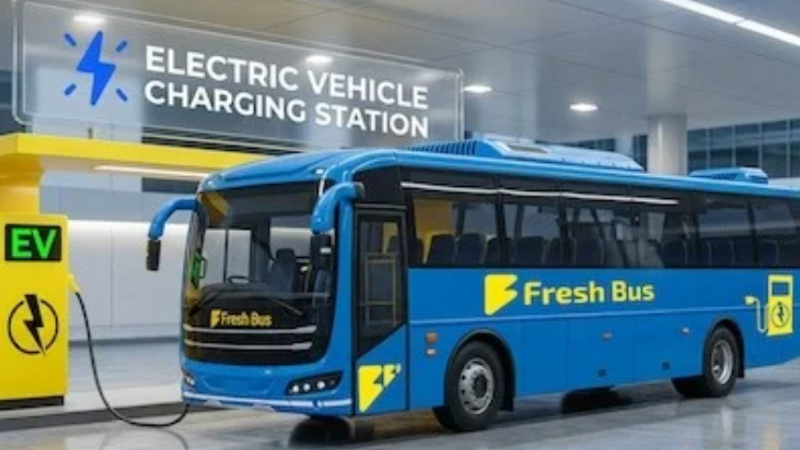
The model has since evolved to partnerships with CPOs like ChargeZone and Statiq, who set up exclusive fast-charging infrastructure (240–360 kW) at Fresh Bus locations and monetise spare capacity with other vehicle formats.
Scaling the fleet and solving problems in sequence
Fresh Bus has methodically solved each bottleneck in sequence:
- Charging: CPOs are now actively setting up highway infrastructure; the problem is largely solved.
- Financing: Leasing partners, including Vertelo (250 buses signed) and Drivn (backed by Nomura, 150 buses signed), have filled the gap left by banks.
- OEM diversification: Started with Olectra (seater format); now partnered with JBM (seater) and Azad (seat-cum-sleeper, same 420 kWh battery size). For routes of 300–450 km, customers prefer lie-flat seating – already launched; for routes of 450 km or more, full sleepers are needed.
- Long-range routes: The remaining challenge is routes like Bangalore–Hyderabad and Delhi–Lucknow (600+ km). Fresh Bus is working with Exponent Energy on a 1.5 MW ultra-fast charging system that can charge a bus in 15 minutes on the way (interim charging). A 660 km Hyderabad–Bangalore route with this technology is launching in July 2026.
Current fleet: ~100 electric buses running inter-city routes.
Targets: 250 by March 2027; 500 by December 2028; 1,000 by 2029.
The long-term opportunity: 100,000 intercity buses operate in India daily.
Fresh Bus sees a long-term opportunity of operating 10,000 e-buses.
How quick commerce reshaped the last-mile EV opportunity
Quick commerce has matured into a full industry — with 5,000 dark stores now operating across Blinkit, Swiggy Instamart, and Zepto. The companies are opening 2–3 stores a day, adding roughly 200 riders to the system each day. Of the 50 lakh people operating in last-mile 2W mobility today, barely 2–3% are on electric vehicles. All major quick commerce companies are mandated to be fully electric by 2030, creating an enormous potential to scale.
The shift to captive fleet operations
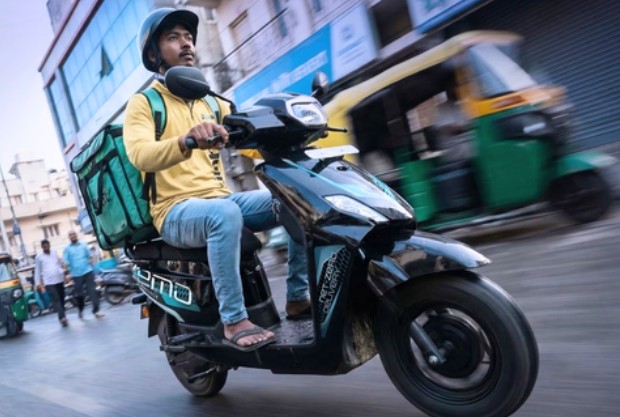
Quick commerce initially onboarded delivery partners who brought their own vehicles. The new model — captive fleets and infrastructure anchored at the dark store — is gaining ground as a high density of riders always need to be available at the store to meet delivery time targets.
Captive mobility and energy at the store helps eliminate cross-platform work by delivery partners, create rider stickiness, and ensure utilisation.
Dark stores as charging hubs
The dark store itself is emerging as the natural charging node. Stores already have 20–30 kW of power and 70–80 riders operating around them. With fast charging at the store, a rider can pull up, pick up deliveries, and in 5–10 minutes of idle time receive 40–50 km of charge.
EMO sets up a charger only where 5–10 confirmed riders are already allocated to it, targeting 6 to 7 riders per charger — keeping each charger running 16–18 hours a day at high utilisation. Public access to dark store chargers is deliberately limited to protect utilisation economics.
Addressing the low-speed vs high-speed vehicle debate
90% of current quick commerce EV deployment has been in low-speed vehicles (no licence required, available for ₹25,000–30,000). However, Sheetanshu sees structural limitations at scale:
- Banks cannot finance low-speed vehicles because there is no VIN, no hypothecation, and no standard lending framework.
- The asset has a 12–18-month life before it is discarded, preventing the full utilisation of the vehicle’s potential.
- Scaling to several lakh vehicles requires institutional financing and registered vehicles with a verifiable asset base. The right lens, he argues, is total cost of ownership over 4–5 years and 80,000 km — not lowest upfront cost.
Energy management as quick commerce’s last profitability lever
Quick commerce companies can control very few of their cost lines. Sheetanshu argued that energy and mobility costs are a major controllable variable on the path to profitability.
With energy prices varying across India and delivery cost targets needing to be standardised nationally, integrating energy storage, solar, and fast charging at the dark store level gives companies a pan-India energy map and a clear path to reducing cost per delivery.
As margins tighten, the number of aggregators in the chain will reduce — the future likely involves quick commerce companies operating directly with one or two infrastructure and mobility partners at each store.
Scaling plans and the move beyond two-wheelers
EMO currently has 15,000 vehicles equipped with its battery system operating across 100 dark stores. Targets for the current financial year: 50,000 vehicles and 500 dark stores | 5–6 OEM partners already aligned to supply compatible vehicles.
Beyond two-wheelers, EMO is expanding into the first- and mid-mile logistics layers, with LCV production partnerships launched this year. The longer-term vision is a unified energy intelligence platform that gives a logistics operator a real-time, pan-India view of energy cost per kilometre across the entire delivery chain.
Fireside chat moderated by Priyakshi Gupta (Editor – EVreporter) at Electricon 2026.
This article was first published in EVreporter June 2026 magazine.
Also read: EMO Energy enters heavy commercial EV battery segment for buses, trucks and fleet applications
Subscribe & Stay Informed
Subscribe today for free and stay on top of latest developments in EV domain.