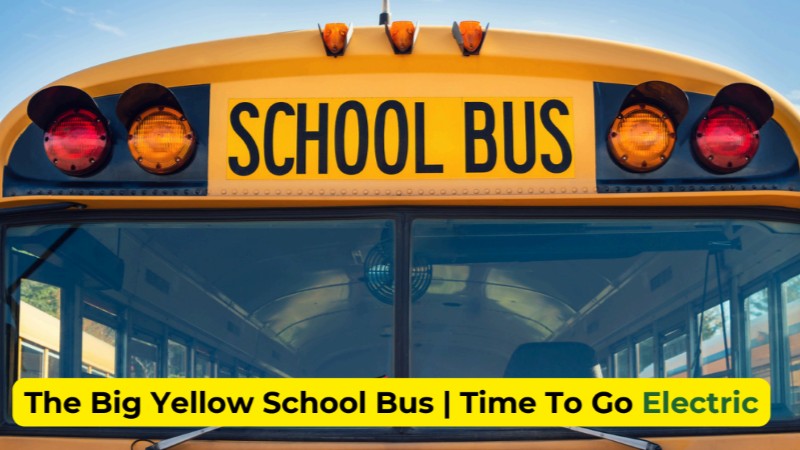
The Usecase for School Buses To Go Electric | Opinion


With diesel prices reaching ₹95.20/litre in Delhi, the rising fuel costs are once again highlighting the urgent need for sustainable, cost-effective mobility alternatives in India. India’s school buses are ideally placed to join the EV transition — short, fixed daily runs, fixed parking, and the fuel costs make the case impossible to ignore, writes Varun Chaturvedi, Founder & CEO at Volttic EV Charging Solutions.
The company has recently set up EV charging infrastructure for electric school buses at 5 locations in Delhi NCR.
Every morning, tens of thousands of school buses fan out across Indian cities. Most travel no more than 120 km in total. That number turns out to be the single most important figure in the electric school bus use case.
The overwhelming majority of school bus operators report daily cumulative distances of 100-120 km, with only a small number reaching 150 km. For an electric bus fitted with a 120–150 kWh battery pack, this range is entirely within reach on a single overnight charge. That matters enormously. It means no need for mid-day opportunity charging, no range anxiety, and no disruption to the school schedule. The bus leaves fully charged in the morning and returns to a charger at night — a pattern as predictable as the school timetable itself.
When Charging is not a Problem
One of the most persistent barriers to commercial EV adoption — where to park and charge the vehicle — does not apply here.
Unlike logistics trucks or last-mile delivery vehicles that scramble for charging access along routes, most school buses have assigned, dedicated parking spaces on school premises.
The infrastructure question reduces to: How Big a Charger do You Need?
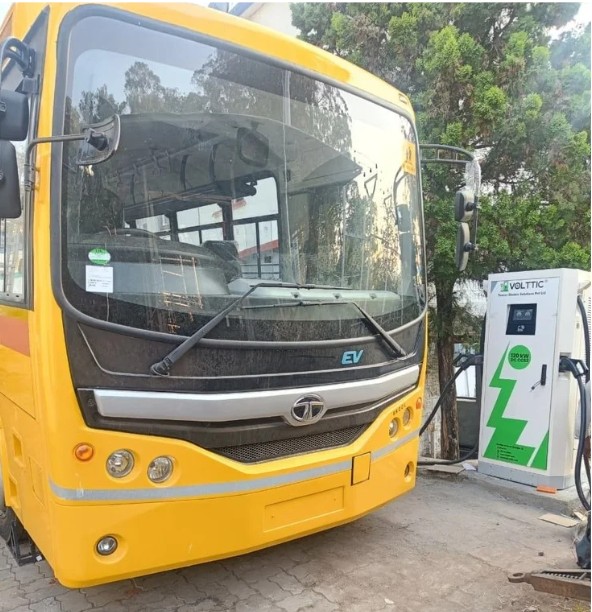
The answer is modest.
Even a 60 kW charger can comfortably replenish a school bus overnight. A 120 kW charger can do it in less than two hours. One charger can serve multiple buses after the school run ends in the afternoon.
Crucially, since charging happens at night, operators can take advantage of time-of-day (ToD) electricity tariff rebates, which in many states significantly reduce the per-unit cost during off-peak hours, further improving the economic efficiency of running the bus.
A typical school bus is a 32-seater, substantial enough that rising fuel costs bite hard. With diesel prices elevated by the ongoing effects of global conflict, operating costs have become a persistent pressure point.
Schools with adequate rooftop or ground space can also explore on-site solar generation to supplement EV charging. The pairing is logical: solar output peaks during school hours when buses sit idle, and grid integration can help offset the overnight charging load. In effect, the school bus can become part of a small, self-sustaining clean energy loop.
Funding the transition
Not every school will need to carry the full capital cost alone. A significant portion of the shift to electric school buses in India can be underwritten by CSR wings and NGOs. This is particularly significant for schools in lower-income catchments or smaller towns, where the upfront investment would otherwise be prohibitive.
The Indian government’s broader push on EV mobility — through policy incentives, state subsidies, and national targets — provides further tailwind. Manufacturers are responding with more models and modifications, which chips away at the hesitation among school bus operators.
A 9m diesel school bus costs around INR 35-40 Lacs, whereas an electric bus 9m with a 150 kWh battery pack will cost around INR 65-70 Lacs.

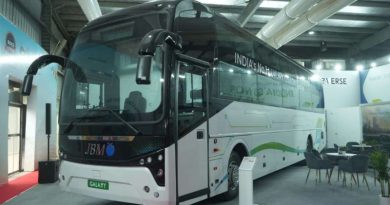
Leading OEMs, including Tata Motors, Eka, Switch Mobility and VECV, are all offering the electric 9m buses.
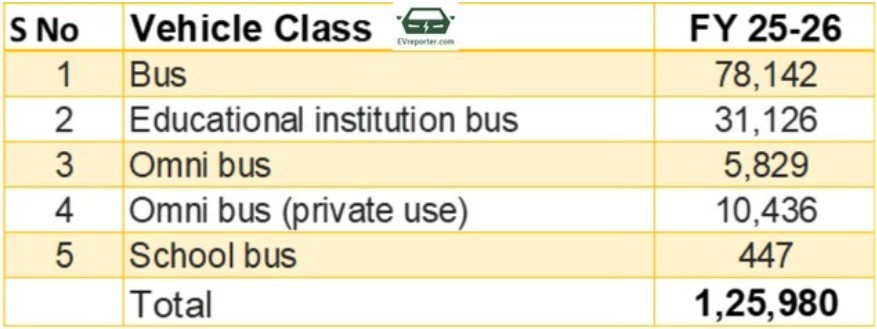
A quick glance at the vehicle class-wise bus registration data on the Vahan Dashboard gives an idea of the significant potential for adopting electric buses for schools and educational institutions.
Shift expected within the year
A year is the timeframe to be broadly optimistic about the pace of this shift. A significant share of new school bus sales over the next 12 months is likely to shift to electric, driven by a combination of rising fuel costs, improved product availability, government pressure, and the straightforward arithmetic of overnight charging economics.
The school bus, it turns out, was always one of the easiest candidates for electrification. Fixed routes. Predictable distances. Assigned parking. Off-peak charging windows. It took rising diesel prices to make that obvious to everyone.
Also read: Understanding the economics of lease models for electric buses and trucks in India
Subscribe & Stay Informed
Subscribe today for free and stay on top of latest developments in EV domain.