What the EV Transition Means for India’s Power System

Kazam is a Bangalore-based EV battery-swapping and charging station provider, charger software provider, and charger manufacturer. They also provide energy management system, helping monitor and optimise energy usage.
This article by Akshay Shekhar, Co-founder & CEO, Kazam explores how we can reduce the energy load on Indian households and the importance of interoperability of EV charging infrastructure.
Every week, someone asks me how many charging stations India needs to hit its EV targets. It’s the wrong question, and I say that as someone who has spent the better part of a decade building charging infrastructure.
The industry has trained itself to think about EV adoption through the same lens we used for petrol: count the stations, count the pumps, extrapolate. But electricity doesn’t work like fuel. Nobody drives to a “station” to plug in their scooter after work. They walk in the door, plug the charger into a regular socket, and go about their evening. That single behavioral difference – invisible in most policy conversations – is quietly reshaping how India’s electricity system needs to be planned.
What 2,00,000 EV chargers taught us
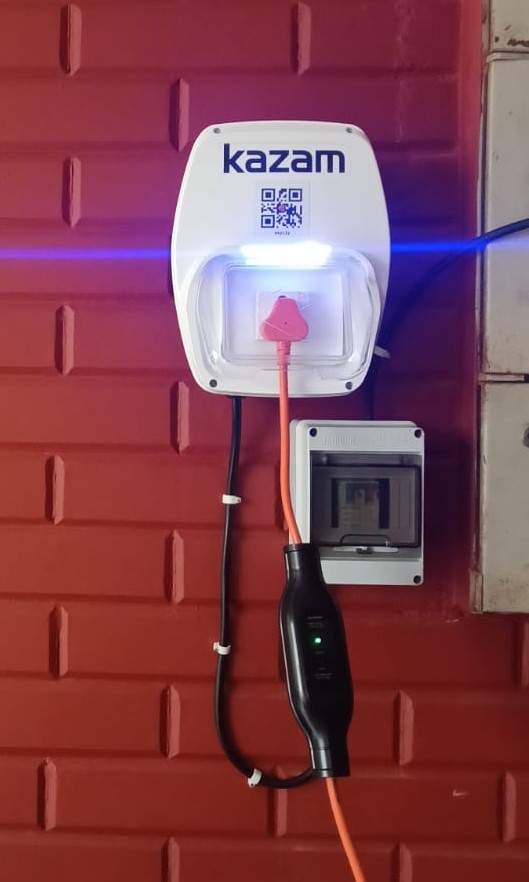
Over the years, working closely with charging infrastructure across homes, workplaces and fleets has given our team a vantage point most of the industry doesn’t have: granular, real-world visibility into how electricity actually flows into EVs, one household at a time.
In a study with the Alliance for an Energy Efficient Economy (AEEE), we looked at data from more than 80,000 residential charger installations, supplemented by field surveys and consumer interactions across over 10,000 pin codes.
The headline number surprised us: 80-90% of daily EV energy consumption, across two-wheelers, three-wheelers and cars, happens at home.
Public charging, the thing every policy document and investor pitch obsesses over, is a fraction of the story. The real load is landing on Indian homes, quietly, every night.
Why this changes the planning problem, not just the data
A two-wheeler charging two to three times a week behaves nothing like a commercial three-wheeler that needs a full charge every day, often topped up again during a lunch break just to keep running. Battery size, how far a vehicle travels, how intensively it’s used, and critically, where and when it plugs in, all shape the load in ways a simple EV count can never capture.
That means two localities with identical EV numbers could be placing entirely different demands on the same feeder line. One neighbourhood dominated by private 2W owners charging overnight looks nothing like one with a fleet of shared three-wheelers charging in shifts through the day.
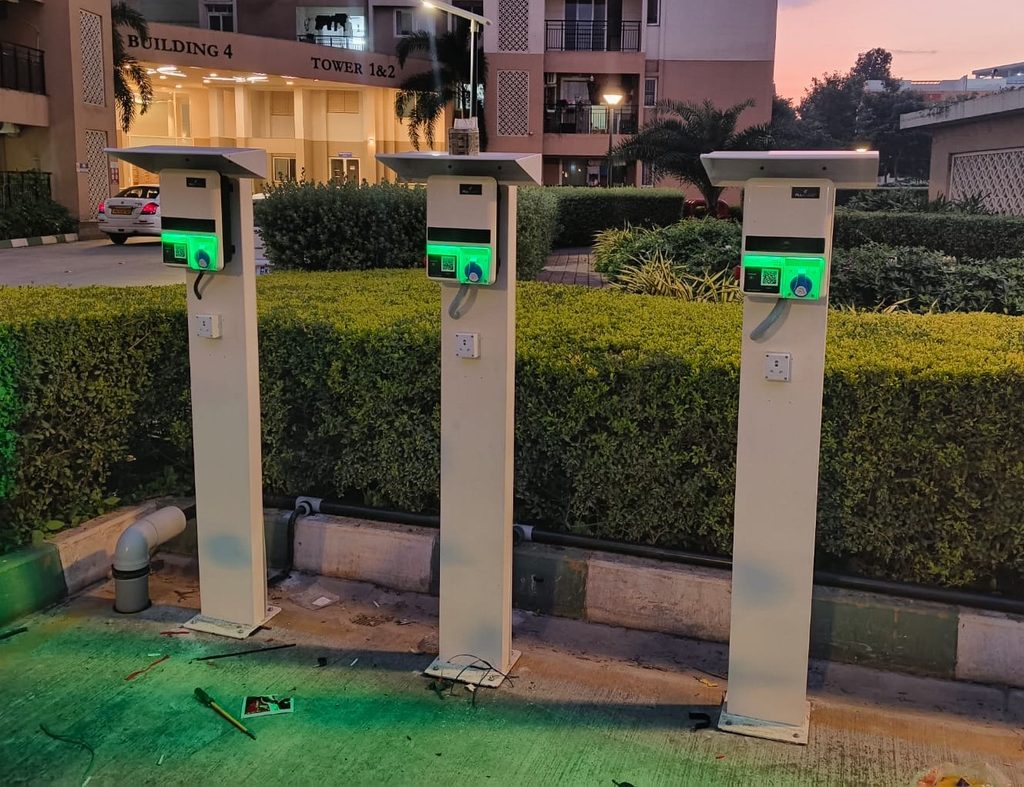
Constraints also shift with geography and housing type, not just vehicle mix.
- In a metropolitan apartment complex, the primary challenge might be shared parking, metering arrangements, or building permissions.
- In a smaller city or semi-urban market, the constraint could be the quality and reliability of the local electricity supply — the AEEE study found that frequent voltage drops to 180-190V in parts of Rajasthan can make stabilisers essential for reliable EV charging.
Commercial EV users add another layer of variation, with longer operating hours and substantially higher charging requirements. A workable national charging strategy, therefore, must account for differences across vehicle segments, housing typologies, local grid conditions, and usage patterns, rather than relying on a single national average.
The CEA’s latest Long-Term National Resource Adequacy Plan projects India’s peak electricity demand will hit 459 GW and energy requirements will reach 3,365 BU by 2035-36. Layer millions of new, diffused, home-based EV loads onto that curve without understanding their shape, and DISCOMs will be forecasting blind at exactly the moment precision matters most.
The gap is already visible in the numbers. In Delhi, dedicated EV meters deployed so far account for barely 6% of the EVs sold in the city.
That means the overwhelming majority of EV charging load in the capital is currently invisible to the DISCOM, folded into ordinary household consumption rather than tracked as the distinct, high-growth load it actually is. You cannot plan a distribution network around a load you cannot see, and right now, DISCOMs are being asked to do exactly that.
Charging Infrastructure is now a data problem
A few years ago, the conversation around EV infrastructure was almost entirely about hardware: how many chargers, what capacity, what standard.
Increasingly, the conversation that matters is about software: who is managing the load, who can see it in real time, and who can shape it before it becomes a grid problem instead of after.
That shift has practical consequences. It means charging infrastructure can no longer be planned as a hardware rollout alone; the layer that understands, aggregates and eventually helps balance consumption has to be designed in from day one, not retrofitted once millions of chargers are already in the ground.
It also means the industry needs far more interoperability than it currently has: a charger, and the data it generates, shouldn’t be locked to a single brand or a single system if the broader grid is going to make sense of aggregate demand.
What residential-first charging demands of everyone in this ecosystem
Residential charging is genuinely carrying 80-90% of the load, and three things follow:
- First, DISCOMs need demand forecasting that works at the feeder and transformer level, not just the state or city level, because that’s the granularity at which home charging will actually bite.
- Second, housing societies and RWAs need to be brought into the planning conversation far earlier than they currently are; a lot of “public charging infrastructure” debate happens without anyone asking whether the local transformer can handle the load a building’s residents are already putting on it.
- Third, charging needs to become schedulable and visible, not just available. A charger that lets someone shift their charging window by two or three hours, in response to grid signals, is worth more to system stability than ten new public charging points.
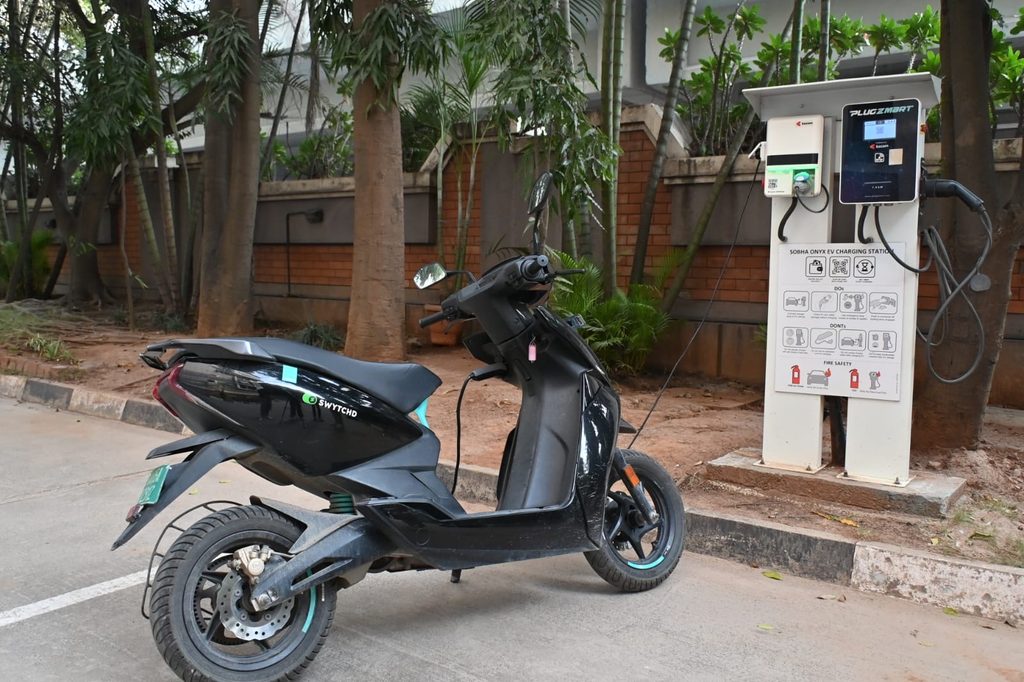
None of this requires waiting for perfect data or a five-year infrastructure buildout. The tools to make residential charging smarter-dynamic scheduling, load visibility, demand response- already exist and are already running across tens of thousands of installations nationwide. What’s missing is the recognition, at a policy and utility level, that this is where the real load lives.
The metric that matters
Vehicle sales numbers make for good headlines. Charging station counts make for good ribbon-cuttings. But if India wants to get ahead of the EV transition rather than react to it, the metric that deserves the most attention is the one nobody’s counting yet: how, when and where electricity actually moves into these vehicles.
The data is telling us clearly that the EV transition in India isn’t primarily happening at public charging points: it’s happening quietly, overnight, in homes across the country. Planning for anything else means planning for the wrong grid.
Also read: How Indians Actually Charge Their EVs at Home? Key Findings from Kazam and AEEE Report
Subscribe & Stay Informed
Subscribe today for free and stay on top of latest developments in EV domain.