Tata Motors Commercial Vehicles Upgrades Entire Portfolio to ECE R29.03 – The Gold Standard for Truck Cabin Safety

India’s logistics backbone runs on its highways, where lakhs of trucks move goods that keep the country’s economy alive and expanding. Conventionally, a truck’s identity was defined by its strength, payload, and operating efficiency. India’s highways have become wider, faster and more demanding, shifting priorities in the trucking ecosystem.
Today, safety, especially cabin safety, has become a central priority for truck performance, reliability and business continuity, and rightly so. Accidents on highways are not limited to vehicle damage; they endanger lives, ruin families and disrupt business stability.
About ECE R29.03
Globally, ECE R29.03 is recognised as the gold standard for truck cabin safety, setting the world’s most stringent requirements for protecting drivers during severe crashes.
It is a regulation that tests whether a truck’s cabin can retain its structural integrity and preserve essential “survival space” for the driver even under extreme conditions, including frontal collisions, roof‑crush situations and rear‑wall loads.
These tests examine the cabin’s core structural behaviour to ensure it remains a strong protective shell around the driver during accidents.
What Makes This Standard Important for Indian Trucks
India experiences some of the highest road‑fatalities, particularly on highways. With the increase in high‑speed corridors and longer continuous driving stretches, the energy involved in crashes has also risen.
What sets ECE R29.03 apart for India is its relevance to these real‑world crash conditions. A stronger cabin is a necessity. The ECE standard evaluates the cabin as an integrated protective cell. It also includes tighter requirements for structural elements, which become critical in rollover‑type situations, a pattern frequently observed on Indian highways. By preserving cabin shape and preventing intrusion, the regulation supports safer outcomes for drivers.
Tata Motors’ Portfolio‑Wide Commitment to Cabin Safety
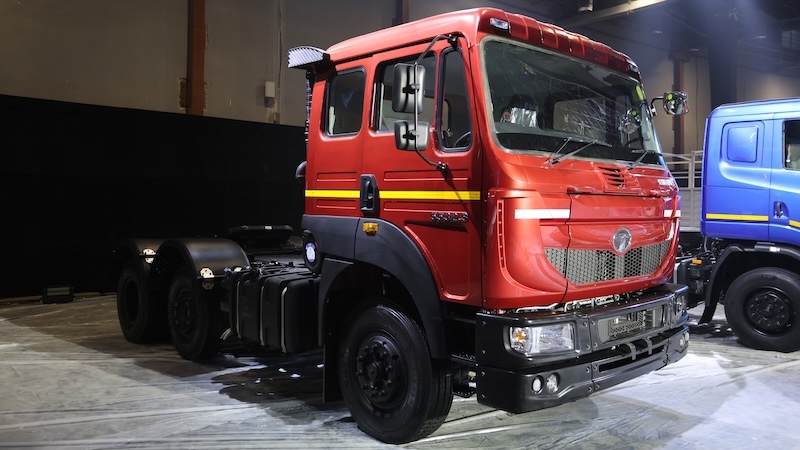
A significant development in the Indian trucking landscape comes from Tata Motors Commercial Vehicles, which upgraded its entire portfolio, including the Prima, Signa, Ultra and Azura range, to comply with ECE R29.03.
This is not a selective move limited to premium variants. It is a comprehensive, full‑range shift that places global cabin‑safety standards at the heart of every major truck platform the company offers. For the first time, a full heavy-duty truck portfolio in India aligns with stringent European crash norms.
When India’s largest commercial‑vehicle manufacturer adds global crash‑safety requirements in its portfolio, it redefines what the market should consider “standard,” especially in a segment where safety was historically viewed as secondary.
Engineering Behind the Safest Cabins in India
Tata Motors’ engineering teams analysed real‑world Indian crash data, studying actual accident patterns, including collision angles, deformation tendencies, and intrusion risks observed on highways.
These insights were transformed into what the engineering teams call “due‑care” validation scenarios, which are additional, more stringent tests tailored to Indian road conditions. These internal tests push the cabin beyond the minimum required thresholds, ensuring that performance not only meets global norms but also withstands the severe scenarios Indian drivers commonly face.
What This Compliance Means for Drivers and Businesses
- For drivers, an ECE R29.03‑compliant cabin offers the confidence that the truck they operate daily has a structure designed to protect them. In the event of an accident, the cabin’s integrity can drastically reduce the risk of fatal or severe injuries by ensuring that intrusion is minimised and survival space remains intact.
- Safer Trucks lead to Better Business. For transporters and fleet owners, safer cabins mean fewer disruptions, potentially lower maintenance costs and better protection of assets and cargo. As driver safety becomes a deciding factor in recruitment and retention, such investments also strengthen the employer–driver relationship. Over time, this transforms into improved reliability, higher fleet uptime and better overall business health.
Placing Safe Trucks at the Core of Sustainable Transport
The introduction of ECE R29.03 reflects a shift in philosophy, from seeing safety as a secondary feature to recognising it as a strategic foundation for driver welfare and operational continuity. As India’s logistics segment expands, structurally stronger cabins, engineered with data‑driven validation and global benchmarks, will play a defining role in shaping the industry’s future. This is not just a technological progression – it is a cultural one, signalling a new chapter in Indian trucking.
Also Read: TATA Motors ACE Pro Mini-Truck in Multiple Powertrain Options
Subscribe & Stay Informed
Subscribe today for free and stay on top of latest developments in EV domain.