Inside IIT Bombay Racing: Engineering a Championship-Winning Electric and Driverless Race Car

A Pioneer of Indian Formula Student Engineering
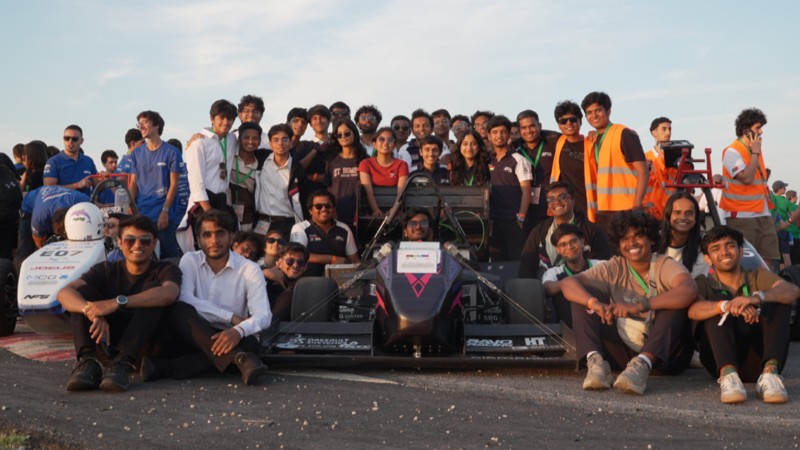
IIT Bombay Racing has designed and built single-seater race cars since 2007, making it one of the longest-running Formula Student programmes in the country. The team was the first in India to abandon combustion power for an all-electric platform, completing that transition in 2012, and later became the first Indian outfit to develop an autonomous, driverless racing system. Nearly two decades of iterative design and competition experience now underpin a two-pronged programme: a full electric-vehicle entry and a dedicated driverless division, both built around the same core chassis and powertrain philosophy.
A Landmark International Season
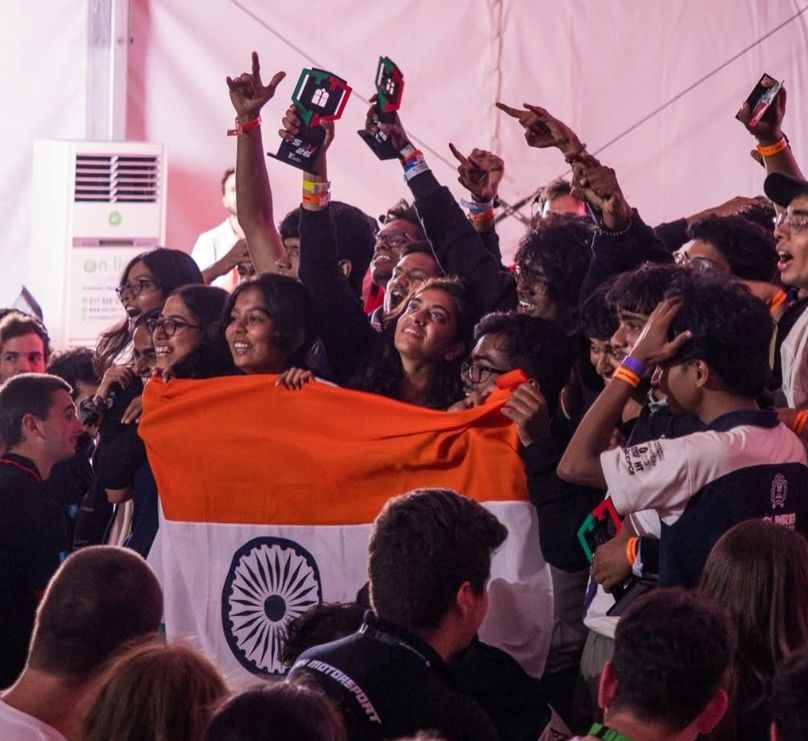
The 2026 season delivered the team’s strongest results to date on the world stage. At Formula Student Portugal 2026, IIT Bombay Racing won in the overall Electric Vehicle, while its sister programme, IIT Bombay Racing Driverless, won the Driverless Cup outright. The result also made it the first Indian team ever to contest the Driverless category at an international Formula Student event. The electric entry additionally completed the gruelling 22-kilometre Endurance event, widely regarded as the discipline’s most punishing test of reliability and sustained performance.
| Overall Standings, Electric Vehicle | 1st Place |
| Engineering Design Presentation (EV) | 1st Place |
| Efficiency | 1st Place |
| Endurance | 2nd Place |
| Cost and Manufacturing | 2nd Place |
| Business Plan Presentation | 4th Place |
| Overall Standings, Driverless Cup | 1st Place |
| Engineering Design Presentation (Driverless) | 1st Place |
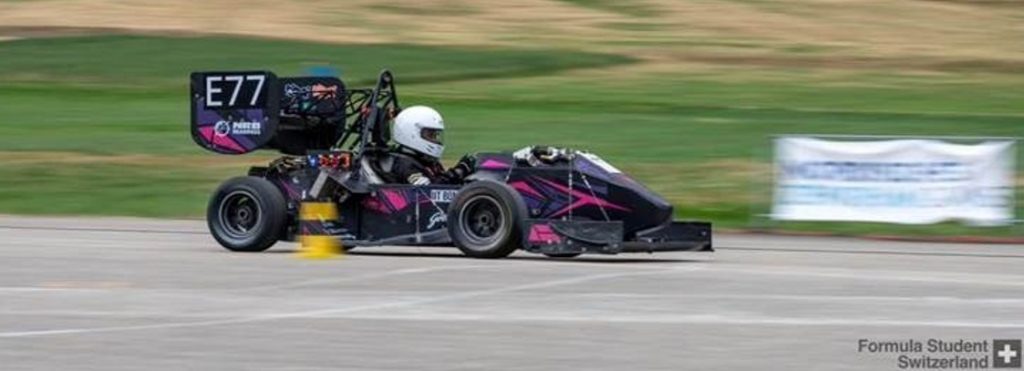
IIT Bombay Racing also competed at Formula Bharat 2026, finishing 3rd overall and topping the Static Events category, while also unveiling India’s first driverless Formula Student car. Separately, at Formula Student Switzerland 2026, the team placed 13th overall against a deep international field. Together, the results place the team among a small group of Formula Student outfits worldwide competing seriously in both the electric and autonomous categories.
Setting the Targets for 2026
Going into the season, the team set itself two headline engineering goals: sharpen the car’s cornering ability and cut a meaningful amount of weight from the previous generation, targeting a 20% improvement in peak lateral grip and a 15% reduction in overall vehicle mass. The grip target was chased through a torque-vectoring system that actively splits power between the rear wheels, paired with traction control to keep the car planted on corner exit. On the weight side, a redesigned, structurally optimised chassis accounted for the largest single saving, with further trims across other subsystems bringing total weight savings to around 42 kg.
Chassis: India’s First Carbon-Fibre Monocoque
Where earlier generations of the car relied on a tubular steel frame, the current chassis marks a structural leap for the programme. Every panel was hand-laid, oven-cured, and bonded into a single load-bearing shell, engineered for torsional stiffness, crash protection, and aggressive weight savings without compromising driver safety. The finished tub is the first carbon-fibre Formula Student monocoque built by an Indian team, combining a substantial weight reduction with the crash resilience and packaging discipline the format demands.
| Material | TC-240 carbon-fibre pre-preg with aluminium honeycomb |
| Manufacturing Process | Hand-laid, oven-cured monocoque |
| Torsional Stiffness | 3,360 Nm/deg |
| Validation Method | Torsional analysis (FEA) |
Powertrain: A Twin-Motor Rear-Wheel-Drive System
The car is driven by a pair of rear-mounted EMRAX permanent-magnet synchronous out-runner motors, controlled through a UniTek Industrie-Elektronik inverter system and tuned using IPG simulation software to sharpen efficiency across the drive cycle. Power is routed through a compact planetary gearbox, and a single shared coolant loop keeps both motors and both inverters within their thermal window through sustained running.
| Layout | Twin rear-mounted motors, RWD |
| Motor Type & Peak Power | PMSM out-runner, 60 kW |
| Inverter | UniTek Industrie-Elektronik GmbH |
| Gearbox | Planetary, 4 planets, 4.55:1 ratio |
| Nominal / Maximum Pack Voltage | 345.6 V / 403.2 V |
| Usable Energy Capacity | 7.78 kWh |
| Cooling System Layout | Single water loop, 2 motors + 2 inverters |
Battery Pack and Energy Storage
Energy storage is built around Molicel P45B cylindrical cells arranged in a 96s5p configuration, split across six segments to satisfy the per-stack limits set by the rulebook. Thermal management relies on forced-air cooling driven by high-output fans.
| Cell Type | Molicel P45B, cylindrical |
| Configuration | 96s5p |
| Pack Segments | 6 segments |
| Busbar Material | Nickel-electroplated copper |
| Thermal Rise (Full Endurance Run) | Within 4°C |
Battery Management and Safety Monitoring
An in-house-developed battery management system, built on a master-slave architecture, continuously tracks cell voltage, current, and temperature across the pack. Communication runs over ISO-SPI and CAN, and an integrated Insulation Monitoring Device watches for isolation faults, triggering an automatic shutdown the moment a breach is detected. It is a safeguard that keeps the high-voltage system fail-safe under race conditions.
Aerodynamics and Cooling
Our aerodynamic package includes a front wing, side diffusers, rear wing and downwashing sidefins, maximizing the downforce while keeping the drag penalty low, achieving a L/D of 2.7. On track validation using sus-potentiometers showed an 8% error in downforce and 12% error in aero bias.
Based on our CFD simulations done on SimScale, the radiator is positioned above the sidetray at an appropriate angle to ensure optimum mass flow rate and efficient cooling. Wind tunnel testing of the radiator was done to verify actual cooling rates with varying air speeds, with which we further refined our CFD setup.
Vehicle Dynamics and Braking
The vehicle dynamics subsystem relies on simulation to replicate the car’s real-time physics and dynamic behaviour before any component reaches the track. Transient MATLAB models and IPG CarMaker are used to determine and optimise key parameters, including suspension characteristics, steering geometry, braking performance, and gear ratios, and to evaluate the vehicle’s response under acceleration, braking, and cornering.
Development follows an iterative loop between simulation and real-world testing. Simulation predictions are validated on track, and the resulting data is fed back into the models to refine future design decisions. The car itself carries a rearward-biased weight split with a low centre of gravity, tuned to keep it planted under acceleration without sacrificing braking stability. Braking is handled by a dual-circuit hydraulic system with an adjustable balance bar, run with a front-leaning bias, while grip comes from Hoosier racing slicks fitted at all four corners. Through this continuous process, the team works to strike the right balance between performance, stability, and predictability, so the car performs consistently across different track conditions.
Design, Manufacturing, and Validation Process
Each subsystem follows a consistent development sequence: design targets are set, concepts are sketched out, and hand calculations establish rough loads before materials are selected and CAD models are built. Structural components are then verified in ANSYS simulation, prototyped, and routed to a manufacturing process chosen for the complexity of the part. Where a component is produced in multiple units, the suspension A-arms, for instance, the team builds and tests a single unit first before committing to a full production run. Validation continues once components are assembled, drawing on IMU data, suspension-linkage force sensors, aerodynamic downforce measurement, and radiator cooling telemetry, with testing extended to driverless-specific runs and full simulated-competition scenarios.
Driver Interface
The driver interacts with the car through a minimalist touchscreen dashboard that surfaces only what is needed mid-run: rpm, yaw rate, acceleration, throttle and brake sensor readings, torque output, battery charge, and system voltage. Physical controls are limited to what a driver might realistically need to adjust while racing, with the rest handled through simple LED status indicators rather than menus. The carbon fibre steering wheel is 3D-printed in-house, and the pedal box offers fore-aft adjustment to comfortably fit different drivers.
Software and Functional Safety
Underpinning both the electric and driverless systems is a fail-safe software architecture built on ROS 2, with the vehicle stepping through clearly defined states, from initial checks through precharge to ready-to-drive, so it can never slip into an unsafe condition. An independent hardware watchdog monitors the car’s critical systems and can trigger a shutdown on its own if the software becomes unresponsive, while two separate CAN networks keep safety-critical control signals apart from general sensor data. Every run is logged onboard and streamed live over LTE, giving the team real-time visibility into the car’s health during testing and competition.
Driverless Systems: Sensing and Actuation
The driverless division layers an autonomous control system onto the same chassis and powertrain platform. Braking redundancy comes from two independent actuator systems: a pneumatically actuated Emergency Brake System and a motor-and-ball-screw-driven Autonomous System Brake, both integrated into the car’s main hydraulic lines through a shuttle valve, so the vehicle can brake reliably whether under human or autonomous control. The system is built around high-pressure pneumatic and hydraulic circuits, with bevel gears handling the mechanical steering actuation.
Perception and localisation are handled by a dedicated sensor suite:
| Compute Unit | NVIDIA Jetson AGX Orin, 64GB RAM |
| Cameras | ZED 2i stereo cameras |
| LiDAR | Ouster OS1, 128-channel, 360° field of view |
| IMU / GNSS-INS | SBG Systems Ellipse N |
| Hardware-Software Interface | ROS2 and CAN communication |
Driverless Systems: Software Architecture
The autonomous stack is organised into three major subsystems, each handling a distinct stage of the driving pipeline:
- Perception: uses the camera and LiDAR data to detect the track’s landmarks, cones of varying size and colour, and determine their spatial coordinates and colour in the car’s own frame of reference. The team reports correctly identifying cones roughly 98 to 99% of the time, even under aggressive driving.
- Simultaneous Localization and Mapping (SLAM): combines the perception output with the vehicle’s own odometry estimate of position and heading to build a ground-frame map of the track and localise the car within it.
- Path Planning and Controls (PPC): uses the resulting map and odometry data to compute a path that keeps the car on track without striking any cones, applying control algorithms to calculate the optimal throttle, brake, and steering signals.
Data flows between these subsystems over ROS2 and CAN, keeping hardware and software in sync throughout a run. It was this platform that carried IIT Bombay Racing Driverless to a Driverless Cup win in Portugal and to the unveiling of the country’s first driverless Formula Student car at Formula Bharat, marking sustained, tangible progress in a discipline where the team remains India’s only active entrant.
Final Reflections
Formula Student’s global driverless category remains a young, technically demanding frontier, one that only a handful of programmes worldwide, and within India only IIT Bombay Racing, have chosen to enter. Backing a carbon-fibre monocoque, a twin-motor electric drivetrain, and an autonomous control stack within a single season is a considerable engineering commitment for a student team, and the 2026 results suggest it has paid off: a Driverless Cup title and an Electric Vehicle title at Formula Student Portugal, backed by strong finishes at Formula Bharat and Formula Student Switzerland, and domestic recognition that has included a Best Powertrain Design award.
What stands out beyond the results is the scale of the operation behind them. IIT Bombay Racing runs as a 120-plus-student organisation with its own three-tier structure, rebuilding a chunk of its engineering team every year and still managing to push the car forward season after season, a continuity problem most industry teams do not have to solve. That structure has effects well beyond the racetrack: alumni of the programme have gone on to found deep-tech and hardware startups elsewhere in India, crediting the confidence of building a race car from scratch as the reason they were willing to try. As more Indian institutions weigh entries into the driverless category and electric powertrains become the default rather than the exception in Formula Student, IIT Bombay Racing’s 2026 season stands as a marker of how far student-led motorsport engineering in the country has advanced, and as a working pipeline for the engineers who will build India’s electric and autonomous vehicle industry next.
Also read: EVreporter Visits C1973 EV Powertrain Lab at IIT Bombay
Subscribe & Stay Informed
Subscribe today for free and stay on top of latest developments in EV domain.