Beyond Lubricants | Gulf Oil’s ₹225 Crore Electric Vehicle Charging Bet

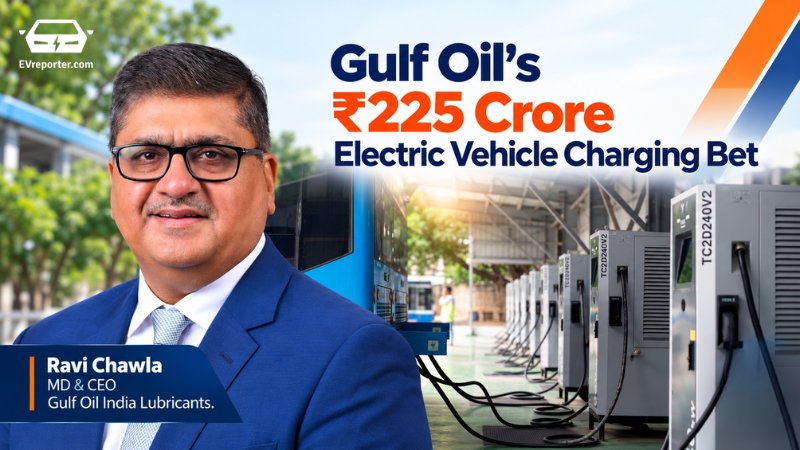
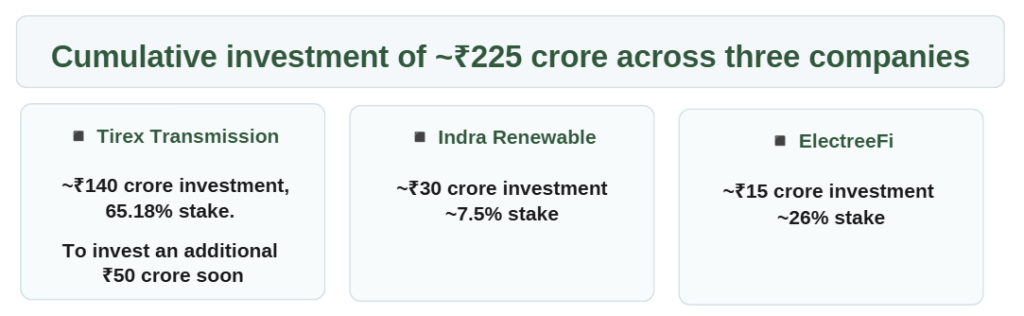
Gulf Oil India, a top-tier player in the lubricants business, has spent the last few years building a second identity in electric mobility. Through stakes in Tirex Transmission (charger manufacturing), Indra Renewable Technologies (UK-based AC charger maker), and ElectreeFi (charging management software) — the company has committed close to ₹185 crore to the EV charging value chain, with another ₹50 crore earmarked for Tirex in the coming months.
Ravi Chawla, MD and CEO of Gulf Oil India Lubricants, discussed the diversification, how Gulf is positioning Tirex beyond its stronghold in electric buses, and how the EV-specific lubricants market is a slow-building opportunity. Edited excerpts from the conversation:
When Gulf Oil India decided to explore electric mobility, what was your investment thesis, and what made you focus on EV charging specifically?
Gulf is among the top lubricant brands. We work with more than 50 OEMs, and our customers span OEMs, infrastructure players, and the B2C market. Our core business will continue to grow at 2-4% even over the next 20 years, because the ICE ecosystem isn’t going anywhere.
EV penetration will continue to grow in India, and this is happening at a fairly rapid pace across vehicle categories. About four to five years ago, we recognized that EV adoption would eat into some lubricant consumption globally. But we also saw an opportunity – we manufacture transmission and EV fluids that go into EVs, and while there’s no engine oil demand without an engine, demand for coolants, brake fluids, and greases remains.
We undertook a global study of our major growth markets—Europe and India—to assess opportunities across the mobility value chain.
Through a series of acquisitions, we are positioning Gulf within the broader EV mobility value chain, anticipating that lubricant growth may slow in certain segments after 20-25 years.
- We identified and invested in Indra, a UK-based company that ranks among the top 5 AC charger makers globally. It develops V2G-capable advanced AC chargers, which we plan to bring to India and localize.
- We also moved into charging software, taking a 25% stake in ElectreeFi.
- We invested in Tirex (an AC and DC charger manufacturer for OEMs), where we now hold over a 65% stake. Tirex has crossed ₹100 crore in turnover, and we’re aiming for ₹300-400 crore in revenue over the next 3-4 years.
What kind of companies are you looking to evaluate further to expand your presence in the EV ecosystem?
Our goal is to grow the businesses we already have. We want to expand Tirex and ElectreeFi, and bring Indra’s technology localized to India.
While we’ve explored battery swapping, the space isn’t yet clear on policy and OEM adoption. We’re open to evaluate new areas for fresh investments, but we do not want to get into cash-burn businesses.
And the focus of Tirex remains on the bus and commercial EV fleets?
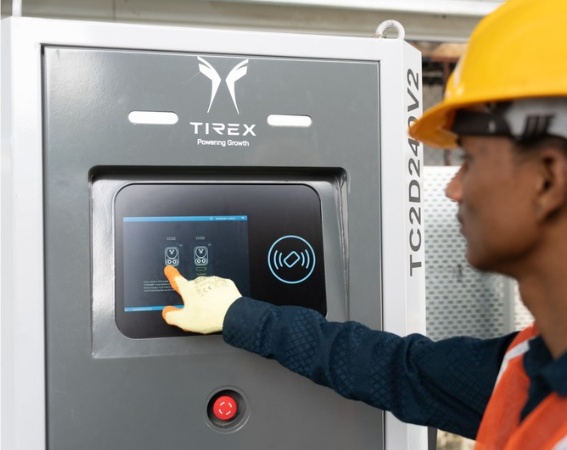
Interestingly, Tirex is expanding its customer base. We had earlier segmented it into public utilities, CPOs, and bus OEMs, and now we’re seeing other retail segments emerging too, like housing societies. We’ve also started supplying AC chargers to OEMs — JSW MG Motors and VinFast.
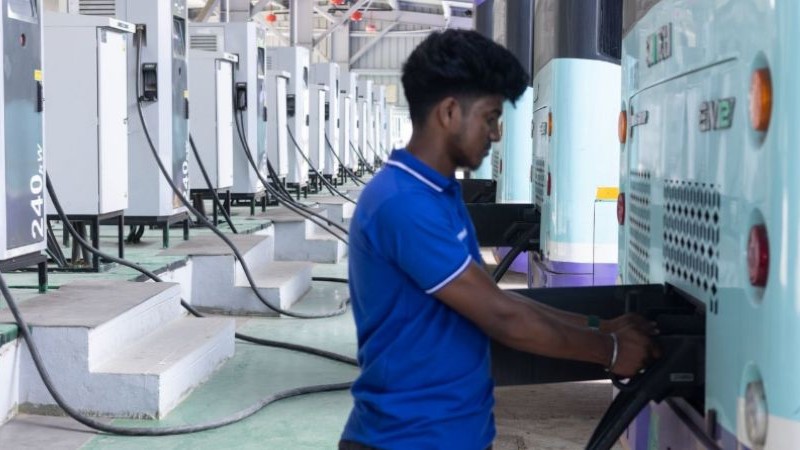
We believe 1 out of 3 e-buses is using a Tirex charger. We are now looking at segments like CPOs and installation. We have also done work for Mahindra Group, supplying fast chargers at some locations and helping them set up some of this charging infrastructure.
We see an opportunity in emerging segments like installation — residential and commercial. Since we already have 50-plus OEMs buying lubricants from us, we can tap into that relationship as their charging needs emerge. Beyond installation and management, we are creating new products for payment gateways, aggregation, and roaming across charging networks — areas ElectreeFi is working on.
Synergy with infrastructure business – We supply lubricants to major infrastructure companies, including Larsen & Toubro and others building out India’s infrastructure. If they want to set up charging facilities at a site, we are well placed to support that. We already have a few proofs of concept underway with construction OEMs looking at chargers for captive electric movement of materials.
Tirex is expanding its facilities in Ahmedabad — we are taking on a new site there. Currently, capacity stands at around 1,800 DC chargers and 50,000 AC chargers. Over the next couple of months, we plan to scale this up significantly — nearly doubling or tripling DC charger capacity and scaling AC charger capacity by 3 to 5 times. We are focused on reliability testing and making our processes transparent for OEMs.
Indra and ElectreeFi — what kind of market presence do these have at the moment, and what are your plans to support the expansion of these businesses?
- ElectreeFi is a software-as-a-service provider. They provide a charging management system (CMS) and additional aggregation platforms to OEMs—including Mahindra & Hero, to name a few. They’re also deploying systems for residential welfare societies and are in talks to provide aggregation, charger roaming, and payment gateways. We want to see ElectreeFi evolve beyond CMS and aggregation, and develop solutions alongside Tirex and other players to work with more OEMs.
- Indra, on the other hand, mainly supplies to the UK market. We are looking at de-speccing and manufacturing their product in India. Indra is working closely with ElectreeFi and Tirex to bring their technology to India.
EVs require transmission fluids or coolants, and you’ve already launched EV-specific products that are being pre-filled at OEM factories right now. How do you see the replacement market for EV-specific products developing?
It’s very nascent. Since vehicles now come with these transmission fluids and other fluids pre-filled, the scope for top-ups or replacement is quite small. We are seeing networks acquire some of this stock, since vehicles do come in for top-up or replacement, but it’s a small market for us at present.
We have made inroads with some OEMs, and we have started working with a major car OEM (to be announced soon). It’s a small volume to start with, but we’re also evolving the product, particularly around thermal management and the electro-properties of the lubricant. The products are ready, and we continue to develop them further.
Where a normal ICE vehicle might use 100 liters, an EV would use only around 15 liters of fluids. So, lubricant usage per vehicle is much lower compared to a conventional ICE vehicle. Of that 15 liters, replacement might happen at around 10-12%, so the overall increase in consumption — across regular lubricants, coolants, and transmission fluids — is likely to be just 1-2%.
EVs matter for emissions and the environment, and they matter for Gulf as well. We are a trusted brand in lubricants — among the top two in the industry — and we see a natural extension from chargers today to EV fluids, charging hardware, and software platforms tomorrow. We are well placed to provide these solutions to our customers.
This interview was first published in EVreporter Sep 2026 magazine.
Also read: Gulf Oil’s EV Transition | Chat with Manish Gangwal
Subscribe & Stay Informed
Subscribe today for free and stay on top of latest developments in EV domain.