Electrifying the Fleet, Not the Stereotypes: Why Businesses Must Put Gender on India’s EV Agenda

Authored by Sandeep Gambhir (CEO, Vertelo), Dr. Aastha Dang (Gender Strategy Specialist, Vertelo)
Two years ago, during our visit to one of the biggest bus depots in Mumbai, one thing stood out starkly: there was no provision for female toilets. This is a conversation that has not occurred in the minds of people working there, since women neither work nor frequent these depots. And we realised we had a mammoth task cut out for us.
With the EV transition in the automobile sector, a huge opportunity exists to increase women’s labour force participation in an otherwise male-governed sector. Women make up less than 1% of the workforce in India’s public transport. However, with the sector on the brink of major transition, from infrastructure to technology, the opportunity to increase women’s induction into the sector has arrived. That missing toilet signifies the problem with the sector in a far more powerful way than any statistic. The transport sector is not a gender-inclusive space. EV transition risks repeating the same errors unless someone deliberately asks pertinent questions, like who these new depots, buses and jobs are being built for. This discourse needs to go beyond research and policy spaces and become part of the businesses, because they will decide whether electrification widens opportunity or just gives old exclusions a new engine.
Two vantage points, one conclusion
We come at this from opposite ends of the same company.
One of us has spent more than a decade building vehicle leasing and mobility finance businesses. From that seat, the questions are about asset utilisation, credit risk and whether a fleet operator can find enough drivers to keep vehicles on the road. The other leads to gender strategy, asking who is in the room, who is left out, and what it would take to change that.
When we embarked on this journey, we expected those two lenses to pull in different directions. Instead, they have kept arriving at the same answer: in the EV transition, gender inclusion is not a side project. It is part of building a sector that works. And the work begins right from the outset.
The view from the balance sheet
It is fair to ask why an EV leasing and finance company should have a view on gender at all. We do not drive buses, run depots or design vehicles.
However, capital allocation has implications for further course of action. Before an electric bus reaches a depot, someone decides who gets funded, what is asked in due diligence and what goes into the lease. If safety features, grievance channels and data reporting are in the contract, they happen. If they are left to goodwill, they are the first thing cut when margins tighten.
Beyond the social argument, there is clear commercial logic at work as well. Fleet operators already struggle to find and keep trained drivers and technicians, and shutting out half the talent pool makes that worse. Women are a large share of the riders that public and shared fleets depend on, and a system they do not trust is one they will not use. For a lessor, that shows up as a utilisation risk on the very assets we finance.
The view from the ground
If the business case explains why, the practice explains how. The biggest lesson here is that gender inclusion works best when it is routine. Women need to be embedded into the system right from the outset. We aim to transform the processes and mindset in the sector, even though its inception stems from the mandatory clauses in the lease agreement.
Ask at the start. Every counterparty answers a gender questionnaire alongside the usual credit and environmental checks: board composition, harassment policies, grievance channels, whether they track data by gender. The aim is not to fail anyone. It is to open the conversation while there is still room to shape the project.
Write it into the contract. CCTV, panic buttons, better-lit waiting areas and designated seating are built into business plans and financing terms, with annual reporting, rather than left as recommendations. A covenant is less inspiring than a campaign, but it survives a change of management.
Look at the map, not just the machine. Where a charging hub goes matters as much as how fast it charges. Lighting, access and whether women can comfortably use a site at night, are questions that form part of the assessment before money moves.
Listen to the people affected. Regular consultation with women’s groups, drivers’ associations, and self-help groups surfaces risks and opportunities that never appear in a spreadsheet.
Provide handholding support: It is important to remain cognizant that this is brand new information for the operator, with no set protocols or guidance manual to reach out to. As a leasing company, we maintain and practice the phrase, “We are just a call away”. From supporting policy development protocols to conducting gender sensitisation training and curating e-videos for the driver, we support our operators in every possible. For the endeavour to stay afloat, it requires support akin to a life jacket, and we strive to do that for all our transactions and partners.
Start at home. It is hard to ask counterparties for something you do not do yourself. That is why our plan includes a dedicated gender and social role reporting to the board, women on our board, a target of 25% women staff, and an internship that brings young women into EV finance.
The Impact
While it is still in the early stages, small steps are being taken. Operators we engage with have started collecting sex-disaggregated data around hiring practices and leadership positions. They now have gender inclusive policies, and gender has become an important part of their conversations. In many operators’ cases, we realised that the will for increased gender inclusivity was strong; however, they lacked the know-how to implement it.
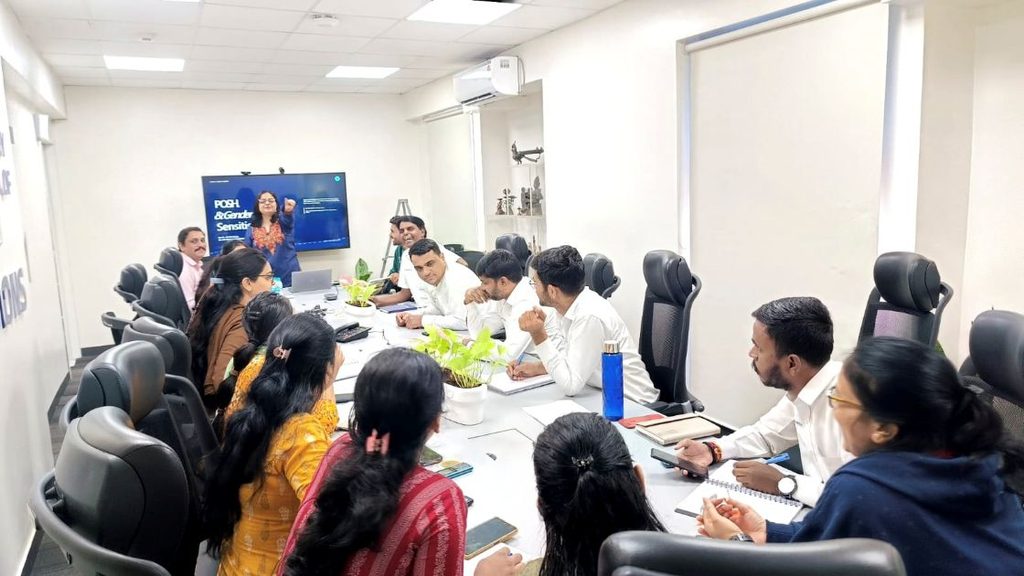
For instance, gender sensitisation training was part of the work from the outset. The idea was met with a lukewarm response initially. Some operators agreed to these sessions with some trepidation. However, those turned out to be the liveliest. Employees were attentive, inquisitive and receptive. Their interest was piqued when they realised that exclusion is not dramatic or an event; it is embedded in everyday practices that are invisibilised within processes. In some organisations, founders and CEOs sat through these training sessions, driving home an important message: Gender inclusion is good business.
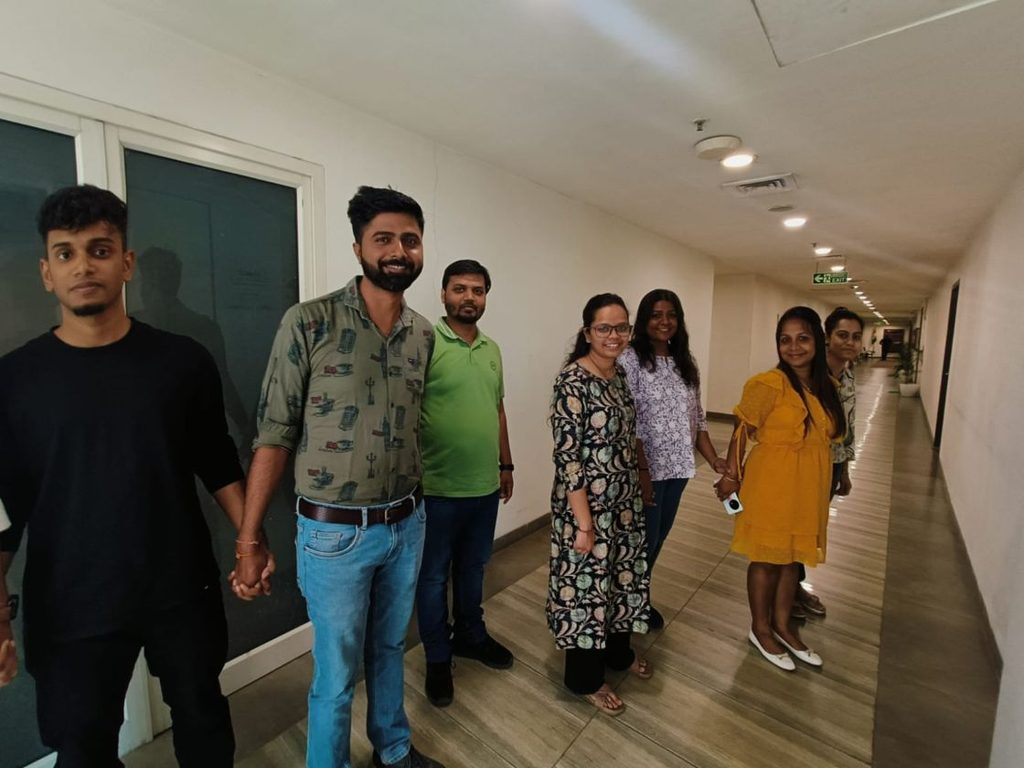
What followed were requests rather than resistance: could we run similar sessions for their depot staff? Could we prepare video training content for their drivers? Gender inclusion and the safety of women passengers are now being woven into driver training modules, catering to the Indian context, with inputs from the experiences of the operators.
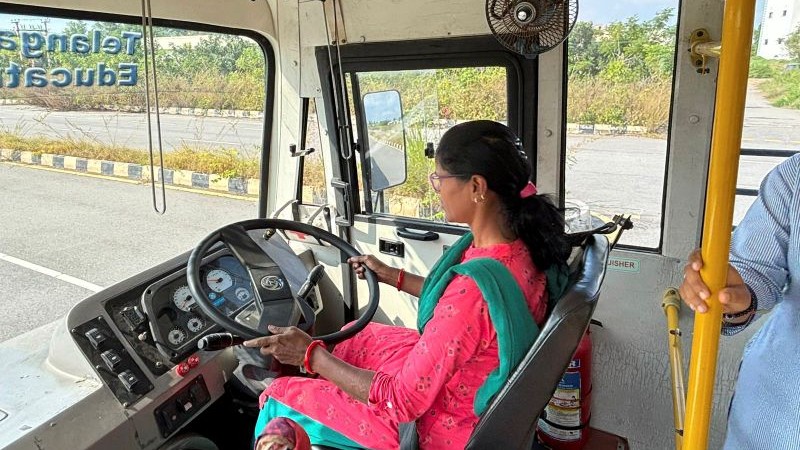
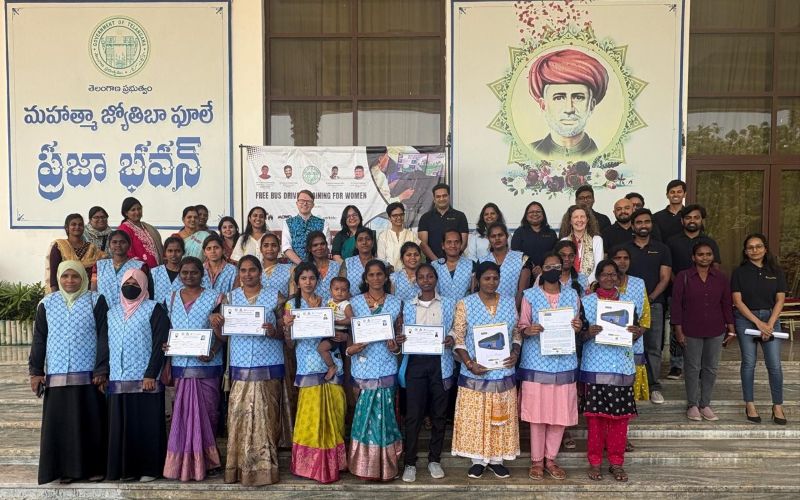
One of our biggest milestones in the journey towards creating gender inclusivity has been orchestrating the MoU signed between the Government of Telangana, FreshBus (one of our operator partners), MOWO Social Initiatives and Vertelo. Through this partnership, the aim is to train and provide internships to 100 women drivers in Telangana. Our biggest learning was to identify and align the right stakeholders rather than doing everything ourselves. The operator brought the jobs, the state livelihoods mission reached the women, and an NGO with experience of training women EV drivers did the skilling. That division of labour is what made it move. To our pleasant surprise, the idea travelled quickly. After hearing the FreshBus example, some of our operators have shown interest in such initiatives. They are seeking support to find women with licenses who can then be trained to drive intercity buses, school buses and EV Autos.
A Long and Arduous Journey Ahead
The start was both revelatory and promising, but real change requires far more time, effort and commitment.
A financier’s reach is indirect. We can draft clauses, but we cannot rewrite entrenched stereotypes. Culture moves slower than contracts.
The pipeline is thin. Heavy-vehicle licenses are costly and slow; few depots have proper toilets, restrooms or safe transport for late shifts, and many families still see driving as men’s work. And many employers still see women more as a liability rather than an opportunity. The industry struggles with a paucity of costs, resources and time required to create these changes from the ground. Sex-disaggregated data, which can be the starting point to map the gender gaps, remains negligent to weak at best. Until operators, lessors and OEMs report how many women they hire, retain and carry, it will be hard to tell real progress from good press releases.
There is light at the end of the tunnel
The opportunity is large precisely because the EV industry is still in its inception phase. India wants 40% of its buses and 70% of its commercial cars to be electric by 2030. Every one of those vehicles needs drivers, technicians, depot staff, charging operators and financiers. The jobs are new, and the skill sets need to be instilled. That makes EVs a rare chance to reset transport without first dismantling a legacy.
There are encouraging signs. Several state governments, including Delhi, Odisha, Kerala, Uttar Pradesh, Bihar, and Maharashtra, are relaxing recruitment rules, setting hiring targets and launching women-led bus services to bring more women drivers into state-run fleets. EKA Mobility and GIZ recently trained 20 women as e-bus drivers for Odisha’s city bus fleet.
Women are among public transport’s most loyal users: 84% of urban women’s work trips in India are made by public transport, compared with 71% for men, and nearly 24% of women commuters say they would use it for most trips if it felt safer. A workforce and supply chain that includes women, from drivers and conductors to depot staff and the people who plan routes and charging sites, is how buses become safe and reliable enough to keep and grow that ridership.
When viewed from the commercial perspective, the payoff is a wider talent pool, steadier fleets and better-used assets. From a social and inclusive perspective, it means safer journeys, real livelihoods, and services designed for everyone who uses them. Simple steps can pave the road: gender criteria in e-bus tenders, women-focused subsidies and skilling in every state EV policy, subsidised heavy-vehicle licenses and better depot facilities for women, and standard sex-disaggregated reporting for EV programs and financiers like us.
The litmus test
India’s EV transition will not only be judged on emissions, cost and uptake, but also on its inclusivity. Lenders cannot fix that alone, but we can stop treating it as someone else’s problem. The money is going in now, and therein lies the opportunity to ensure its benefits are inclusive and equitable.
About the author:

Sandeep Gambhir is CEO of Vertelo, a Macquarie-backed fleet electrification and EV leasing platform.
Sandeep brings over 27 years of leadership experience with organisations including Citigroup, Barclays and ORIX India, where he served as Managing Director and CEO for over a decade. His expertise spans B2B auto leasing, financial services and electric mobility, with experience in business transformation, strategic growth and team leadership. At Vertelo, he focuses on scaling the business, strengthening industry partnerships and supporting sustainable mobility solutions in India.

Dr. Aastha Dang is Gender Strategy Specialist at Vertelo, where she leads its gender inclusion work. Views are personal.
Aastha brings over 15 years of experience in gender research, public policy, programme evaluation and gender mainstreaming. At Vertelo, she leads gender strategy across e-mobility investments, focusing on women’s participation and inclusion. Previously, she worked with 3ie and NITI Aayog on research and evaluation initiatives related to gender, livelihoods and public policy. She holds a PhD in Gender Studies and a Master’s in Sociology, with expertise in gender strategy, impact evaluation and policy engagement.
Sources:
1. ITDP India and GIZ (2025). Gender Inclusivity in India’s Public Transport (press note). Source for women making up under 1% of the public transport workforce, 84% of urban women’s work trips (against 71% of men’s) being made by public transport (Census 2011), and 24% of women commuters who would shift to public transport for most trips if conditions improved. https://itdp.in/wp-content/uploads/2025/11/Press-note_GIPT.pdf
2. The News Minute (20 November 2025). “Women make up less than 1% of workforce in India’s public transport: Survey finds.” https://www.thenewsminute.com/news/women-make-up-less-than-1-of-workforce-in-indias-public-transport-survey-finds
3. NDTV Profit ([date]). “India’s Go Green Initiative And The Copper Conundrum.” https://www.ndtvprofit.com/business/indias-go-green-initiative-and-the-copper-conundrum-10091553
4. ThePrint / PTI (12 February 2022). “Delhi govt eases norms for recruitment of women bus drivers.” https://theprint.in/india/delhi-govt-eases-norms-for-recruitment-of-women-bus-drivers/829055
5. ThePrint / PTI (21 January 2026). “Odisha govt to engage women drivers to operate state-run ‘Ama buses’.” https://theprint.in/india/odisha-govt-to-engage-women-drivers-to-operate-state-run-ama-buses/2832617
6. Women Entrepreneurs Review (7 July 2023). “KSRTC Empowers Women as Six Drivers Join K-SWIFT E-Bus Fleet” (Kerala). https://womenentrepreneursreview.com/news/ksrtc-empowers-women-as-six-drivers-join-k-swift-e-bus-fleet-nwid-3624.html
7. Lokmat Times (11 August 2023). “In a first, UPSRTC gets 17 women bus drivers” (Uttar Pradesh). https://www.lokmattimes.com/national/in-a-first-upsrtc-gets-17-women-bus-drivers
8. ThePrint / PTI (26 November 2025). “Bihar govt to train ‘jeevika didis’ as drivers, conductors of pink buses.” https://theprint.in/india/bihar-govt-to-train-jeevika-didis-as-drivers-conductors-of-pink-buses-minister/2792560
9. Business Standard / PTI (24 August 2019). “MSRTC inducts 163 women to drive buses” (Maharashtra). https://www.business-standard.com/article/pti-stories/msrtc-inducts-163-women-to-drive-buses-119082400584_1.html
10. Autocar Professional. “India’s First All-Women E-Bus Driver Programme Completes Training for 20 Odisha Recruits” (EKA Mobility, GIZ, CRUT). https://www.autocarpro.in/news/indias-first-all-women-e-bus-driver-programme-completes-training-for-20-odisha-recruits-131233
11. ETAuto (December 2025). “Telangana pioneers women bus driver initiative with multi-stakeholder agreement.” https://auto.economictimes.indiatimes.com/news/commercial-vehicle/telangana-pioneers-women-bus-driver-initiative-with-multi-stakeholder-agreement/126035418
Also read: Beyond Financing: How Vertelo is solving the complete fleet electrification puzzle
Subscribe & Stay Informed
Subscribe today for free and stay on top of latest developments in EV domain.