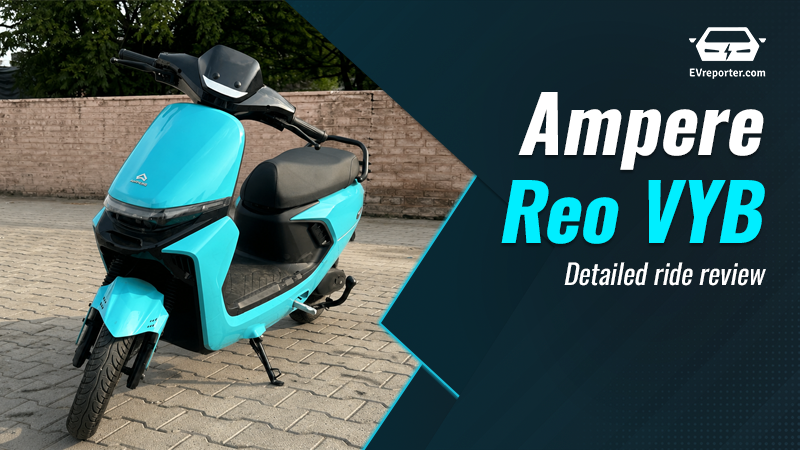
Ampere Reo VYB Review: Everything You Need to Know Before You Buy

Ampere is the sixth-largest electric 2W seller in India; its sales has crossed at least 10,000 e-2Ws per month (as of July 2026). We say “at least” because all the other 5 top brands (TVS, Ather, Ola, Bajaj & Hero MotoCorp) manufacture only high-speed electric two-wheelers, i.e. those with speeds over 25 km/h, whereas Ampere also makes low-speed scooters. Official sales figures are largely limited to high-speed two-wheelers. Low-speed scooters, which also sell in meaningful numbers, fall outside this data because they don’t require registration or a number plate with the state transport authority—so their sales figures go untracked.
This is what makes Ampere unique: it competes with bigger brands by building its foundation around a largely underserved buyer segment that does not want to pay a premium for a high-speed electric two-wheeler, yet wants a vehicle backed by a decent brand (Ampere has been a Greaves Cotton brand for quite some time) and strong after-sales service through a robust dealer network. Ampere also sells high-speed electric two-wheelers, ensuring it does not miss out on that business either.
This uniqueness may not be driven entirely by passion. Low-speed scooters have always been low-hanging fruit for most non-legacy auto players that have entered the EV game, with China as the friendly neighbourhood export market feeding the insatiable demand for both e-2W components and complete ready-to-assemble e-2Ws. But leveraging this availability to your advantage and building a brand around it is a skill very few have mastered out of the 100+ companies selling e-2Ws in India.
Today we are posting the review of Ampere’s latest product– Reo VYB (a low-speed scooter, in case you were wondering). We have been riding the Ampere Reo VYB for a few days now, in real city traffic, on regular roads. We found that it does some things surprisingly well and a few things quite so much.
Table of Contents
Overview
The Reo VYB is Ampere’s latest low-speed electric scooter, launched at an introductory price of ₹69,499 (ex-showroom). It is designed for a specific audience: riders looking for a simple, license-free electric scooter for short daily commutes without the hassle of RTO registration.
Rather than trying to appeal to every buyer, Ampere has focused on students, first-time riders, and city commuters whose daily travel remains within a limited radius. Once you understand this intended use case, most of the scooter’s design and engineering decisions begin to make sense.
Design & Comfort
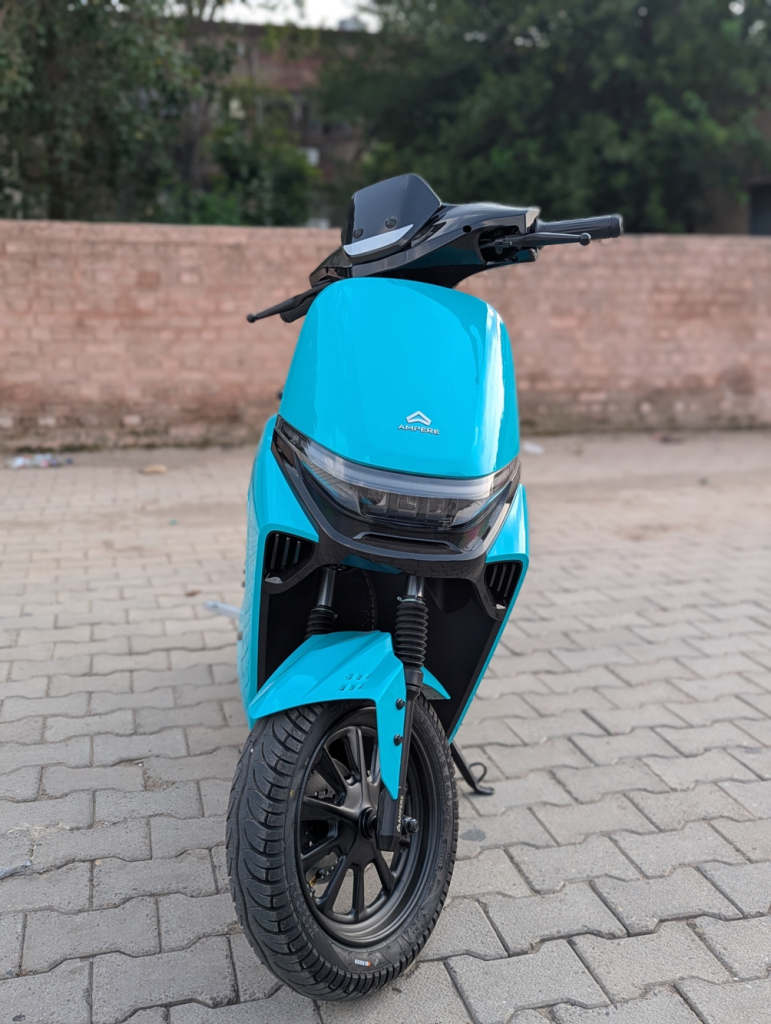
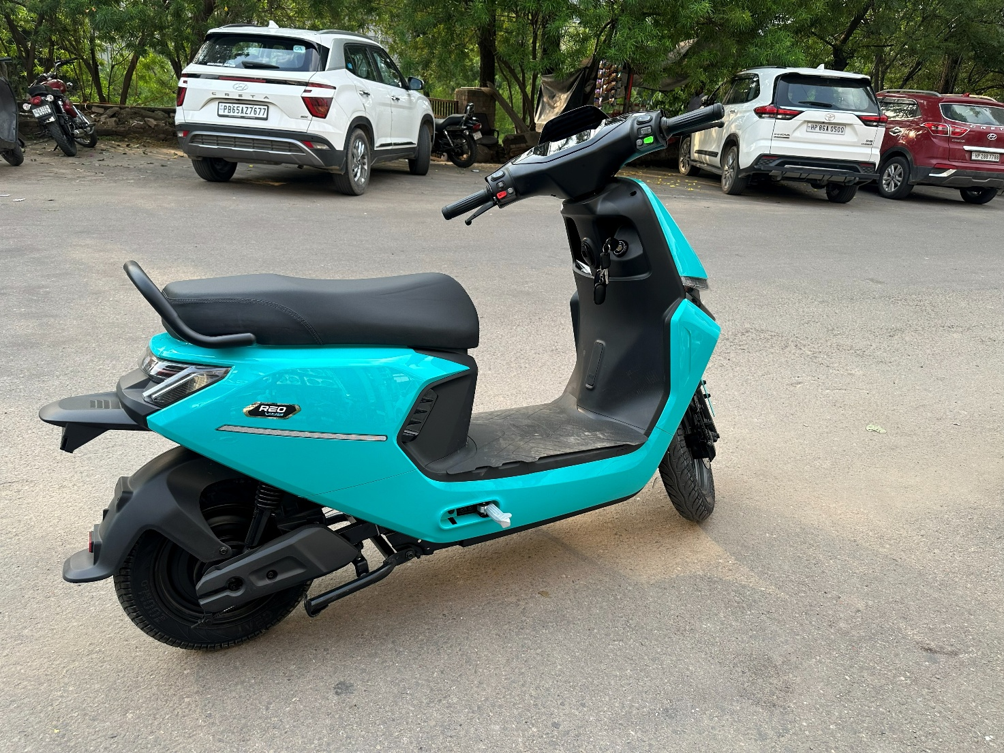
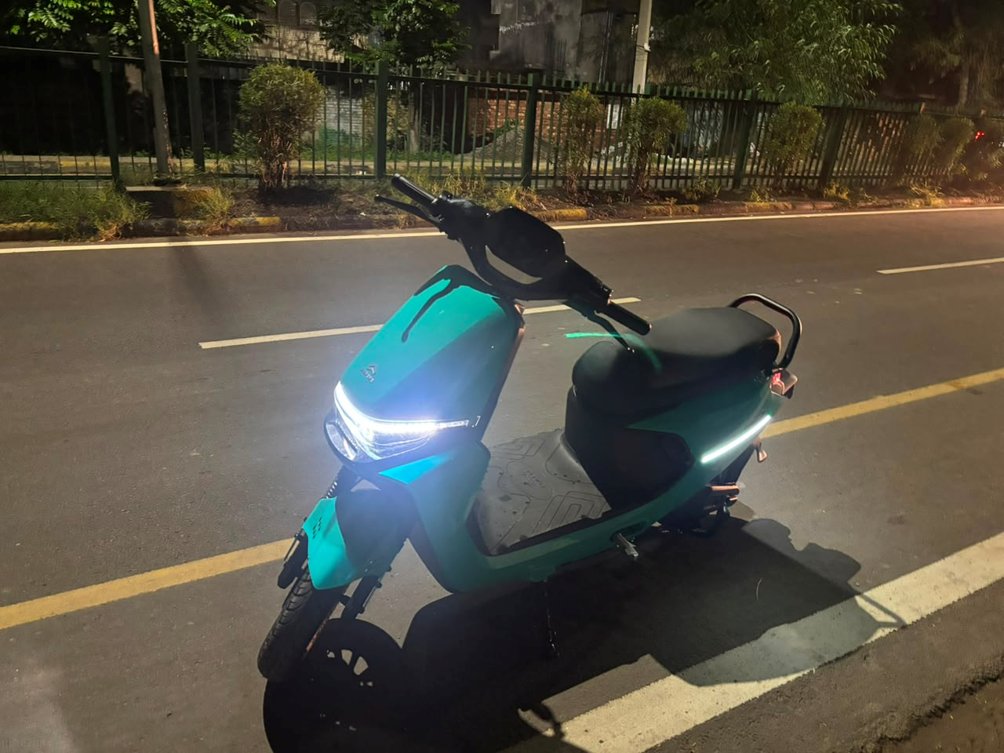
The front panel has a noticeable road presence for a scooter this price. There’s a bold, new-gen face with a chrome Ampere logo at the bottom, a sleek DRL strip, and three ice cube-shaped projector headlamps for low and high beam, plus well-integrated LED indicators.
The 3.5-inch multi-colour LCD is simple to read. It shows all essential information, including speed, odometer, battery level, riding mode, cruise control status, SOS indicator, both high- and low-beam indicators, and hazard lights.
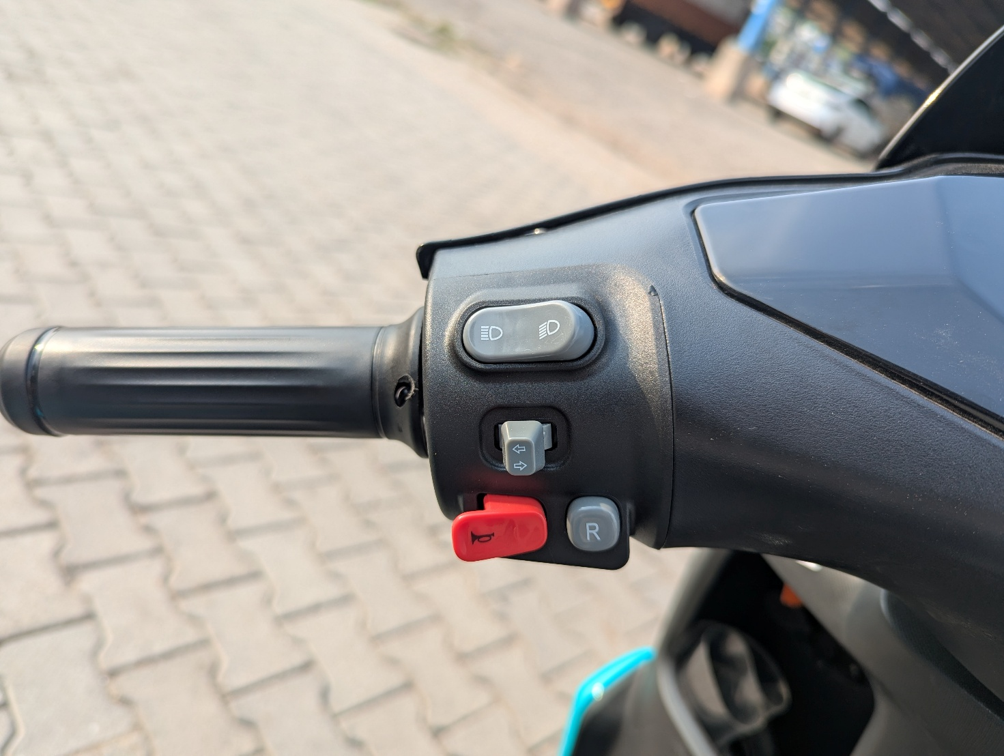
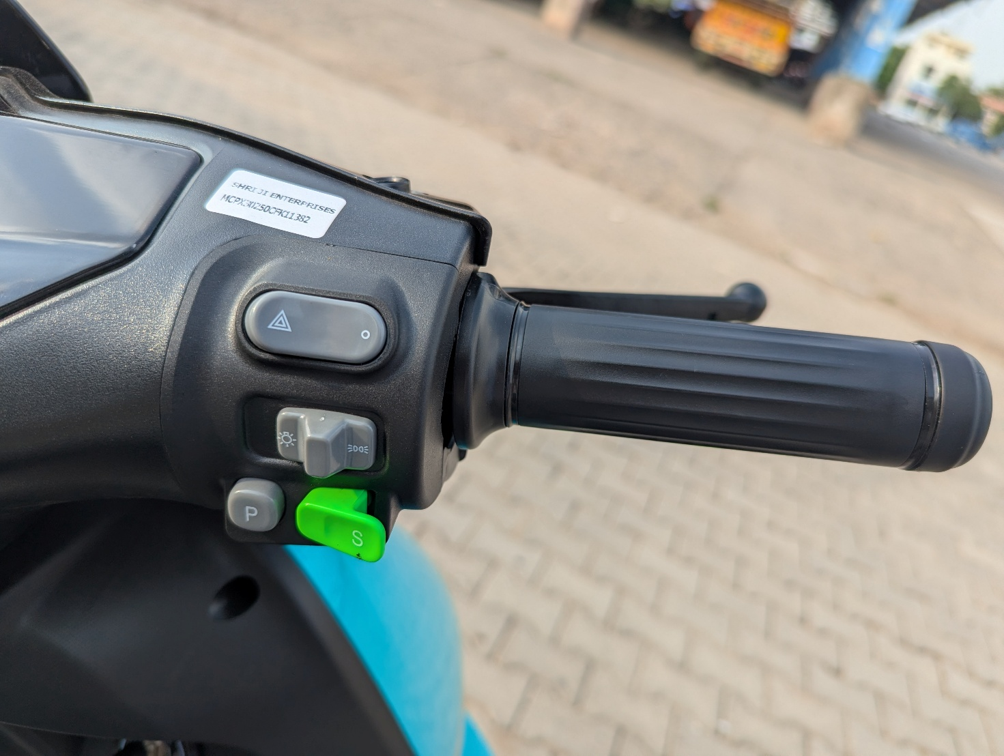
The quality of handlebar switches felt decent. On the right side, you get a hazard button, a mode switch (we’ll come to this later), a light on/off switch, and a cruise control activation button. On the left side, there’s a low/high beam switch, an indicator switch, a reverse mode button, and a horn button.
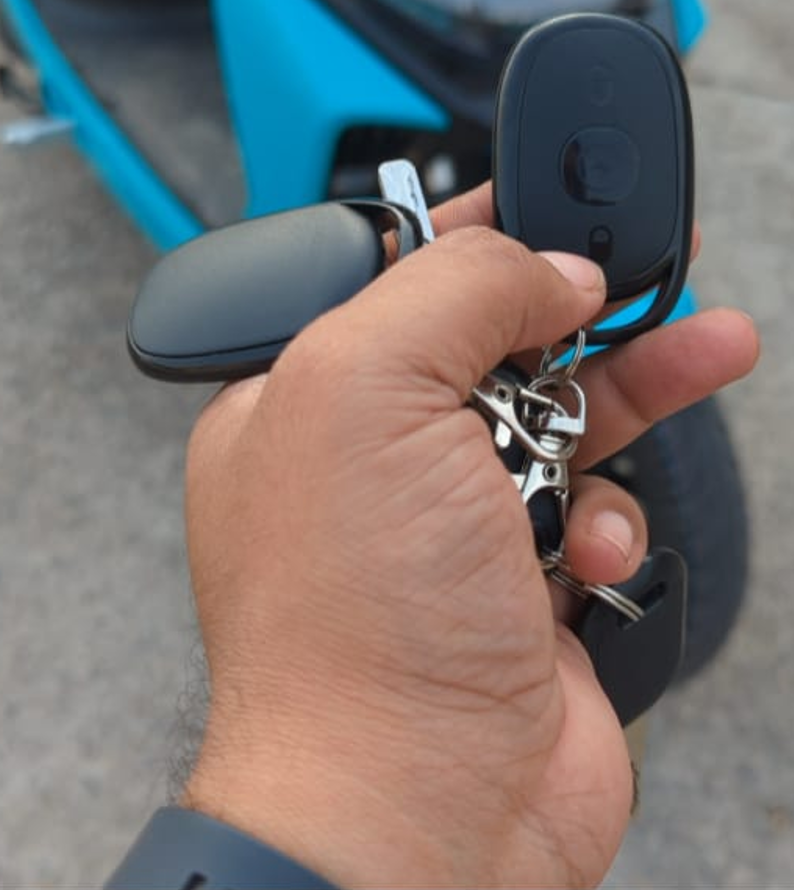
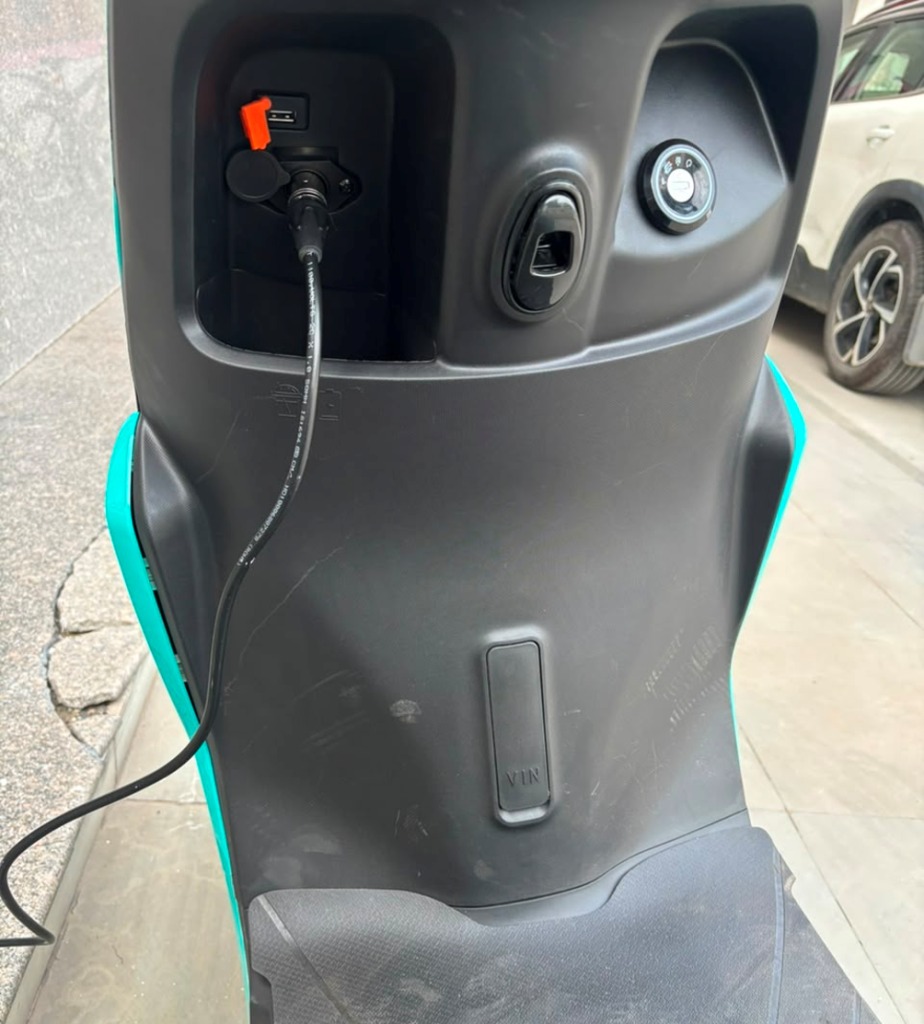
Access to the scooter is available through both a conventional physical key and a smart key. The physical key unlocks both the handle and the scooter, while the smart key allows locking, unlocking, and starting the vehicle without inserting the key. It takes time to understand the functionality of the smart key, especially when you lock using the physical key, but unlock using the smart key, or vice versa. On the left inner front panel, Ampere has positioned the charging port, which uses an XLR 3-pin MIC connector, alongside a USB charging socket, allowing riders to charge a mobile phone while travelling.
One design compromise is worth highlighting: since the battery pack is positioned beneath the floorboard, the footrest sits slightly higher than on a conventional scooter. Riders taller than 5 feet 5 inches may begin to feel uncomfortable after 5 to 6 km, with the possibility of their knees brushing against the handlebar during turns.
The pillion seat comes equipped with an aluminium flip-type footrest and a sturdy metal grab rail. An LED strip integrated beneath the REO badge on the side panels adds a premium touch without appearing overly flashy, something not always seen on scooters in this category.
Practical safety touches continue with both a central and a side stand. The scooter will not start unless the side stand is fully retracted, a simple but useful safety measure.
Weighing just 71 kg (kerb), the Reo VYB feels exceptionally light while manoeuvring through traffic, pushing it around parking areas, or placing it on the centre stand. Its 125 mm ground clearance is sufficient for everyday speed breakers and typical urban roads, although it is clearly intended for city use rather than rough terrain.
One observation from our test vehicle deserves mention. The scooter we received was equipped with a 12-inch alloy front wheel with a front disc brake, while the rear wheel was 10 inches with a hub motor and a drum brake. However, Ampere’s official website lists 10-inch wheels at both ends. This discrepancy is worth confirming with your dealer before purchase.
Ampere quotes 24 litres of under-seat storage. In practice, the compartment is deeper than it is wide. A medium-sized full-face helmet or a half-face helmet fits comfortably, whereas a larger full-face helmet may only fit partially.
Specs at a Glance
- Kerb weight: 71 kg
- Ground clearance: 125 mm
- Wheels: Alloy, 10/10 inch as per Ampere (our test unit had a 12 inch front)
- Brakes: Front disc, rear drum
- Suspension: Front telescopic, rear dual suspension
- Boot space: 24 litres
- Display: 3.5-inch colour LCD
- Riding modes: 2 modes plus reverse
- ABS: Not available
- Connectivity: No IoT or app connectivity
- Charging socket: XLR 3-pin MIC connector, plus USB for phone charging
- Under-seat MCB switch, useful if you are not using the scooter for a few days
Speed Class & License Status
With a top speed of 25 km/h, the Reo VYB falls under India’s low-speed electric vehicle category. This means buyers do not require a driving licence or vehicle registration, making ownership considerably simpler than that of a conventional scooter.
For students, first-time riders, or anyone who does not yet possess a driving licence, this alone can be a major deciding factor.
Charging
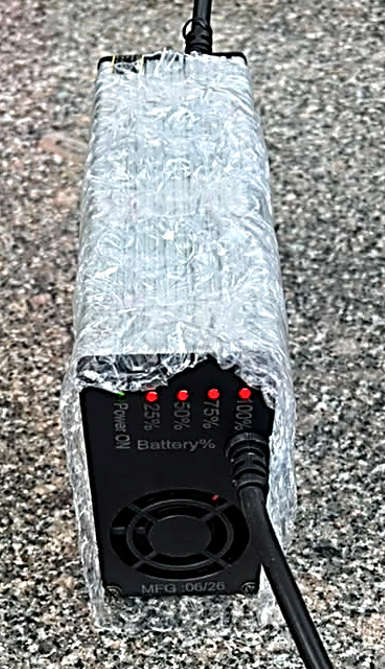
The supplied charger is a 6A, 54.6V unit manufactured by Accord, a Hyderabad-based company, and plugs directly into a standard household wall socket. During charging, the scooter’s LCD did not display any indication of charging status or the time left until charging was complete. Instead, the indicators were on the charger itself, in the form of red LEDs for every 25% charging interval.
Battery & Range
Powering the scooter is a 1.44 kWh LFP (Lithium Iron Phosphate) battery paired with a BLDC hub motor. Charging from 0 to 80% takes around 4 hours, while a complete charge requires approximately 5 hours and 30 minutes.
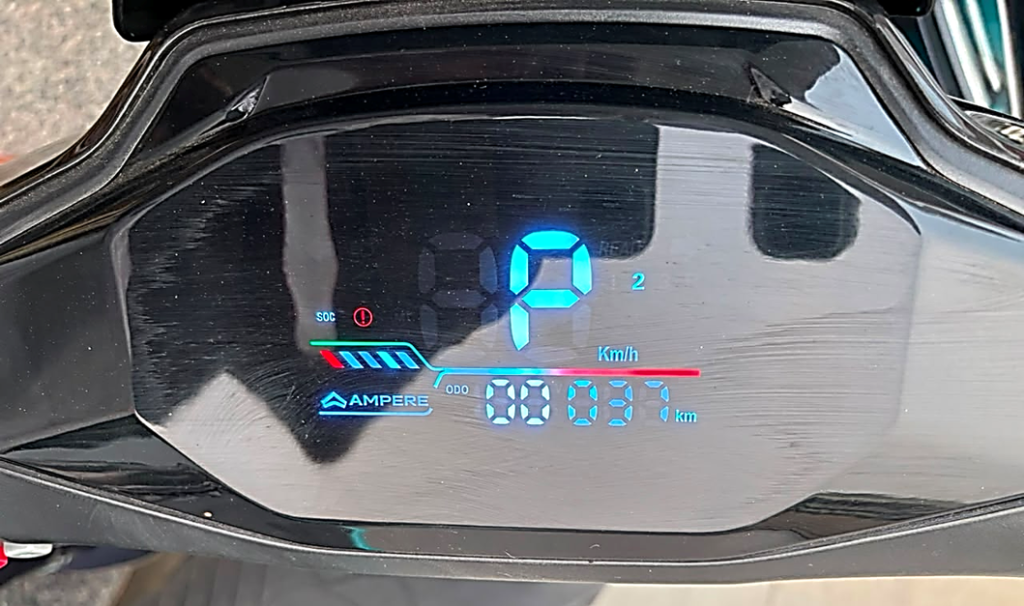
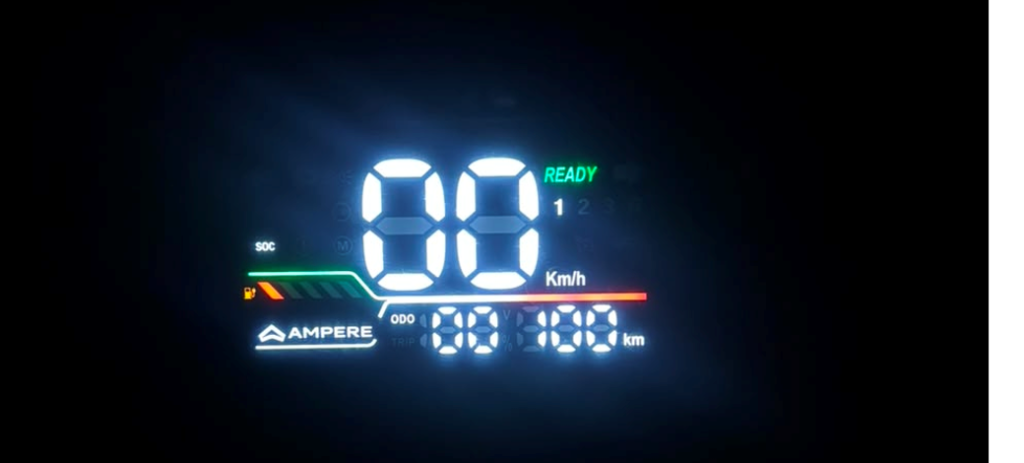
Ampere claims a certified range of 80 km on a full charge. We performed a range test of the vehicle under various conditions in Chandigarh Tricity: a mix of city and highway driving, plain roads and slightly uphill roads. Single adult, adult + child, two adults. We started the range test at an odometer reading of 37 km (yes, it was a brand-new piece) with a fully charged battery at 5 bars, and ended it at a 100 km odometer reading, with one bar remaining. So, we drove 63 km, and considering that each bar vanished after about 15 km of additional riding, we estimate the total range around 75 km. That’s not very far off from Ampere’s original claim of 80 km.
Motor & Power
The Reo VYB is powered by a BLDC hub motor producing 0.25 kW peak power and 50 Nm of peak torque at the wheel.
Scooter’s gradeability is at 5 degrees, making it suitable for everyday city roads but less comfortable on steep flyovers or sharp parking ramps. Gradeability is the maximum slope or incline that an electric scooter can successfully climb without losing significant speed or power.
The motor carries an IP65 rating, protecting against dust ingress and water exposure during regular urban use.
Ride Review
On the road, the Reo VYB delivers smooth and predictable acceleration, gradually building up to its top speed of 25 km/h rather than reaching it abruptly. For a scooter designed primarily for urban commuting, the power delivery feels appropriate and easy to manage.
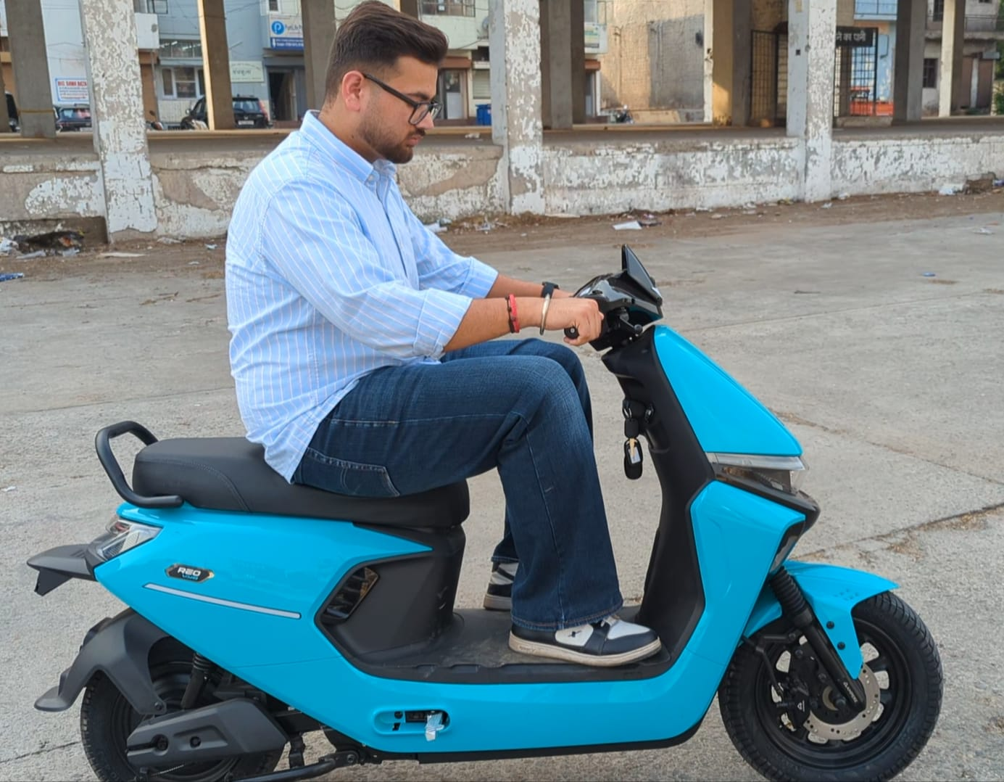
The handlebar is comfortable, and shorter riders will genuinely enjoy the ergonomics. But if you’re taller than 5 feet 5 inches, the low seat combined with the raised footrest gets uncomfortable, and your knee may hit the handlebar on longer rides. Ampere could not have raised the seat without hurting its target audience, since that would make it harder for shorter riders to plant their feet on the ground; this seems a planned trade-off, not an oversight.
The front telescopic suspension and rear dual suspension soak up every day jerks and potholes well, giving confidence on regular city roads. This is strictly not a scooter for off-roading or rough roads.
Cruise control is one feature that deserves attention. After the initial learning curve, we figured that to activate cruise control, we need to accelerate while pressing the cruise control button. Not a dealbreaker, but worth knowing rather than discovering on your own. Once you figure this out, it’s a handy feature, especially on long straight roads, and actually more usable than in cars, since you reach the threshold speed of 25 km/h quite soon and would otherwise have to keep holding the throttle at maximum in the absence of a cruise control feature.
There are three modes operated via a green push switch: Parking, Mode 1 and Mode 2. For the vehicle to move forward, it must be either in Mode 1 or Mode 2. Despite many attempts, we were unable to differentiate between Mode 1 & Mode 2. They may be regen levels or power modes; we kept guessing and could not figure it out.
Throttle response is touch-delayed, though for a low-speed vehicle built for gentle city commuting, this makes sense and did not feel unsafe in testing. The turning radius is tight enough to make navigating narrow streets and parking areas effortless.
The front brake bites in almost instantly, and thanks to the speed cap, we did not experience any skidding, even while braking suddenly. Reverse mode worked reliably too, genuinely helpful when parking in cramped spaces.
Load-carrying ability should be viewed realistically. The scooter comfortably handles a single rider or one adult accompanied by a child. However, with two average-sized adults onboard, the initial acceleration becomes noticeably slower. While the loss of initial pickup is evident, the scooter eventually reaches its top speed with two adults and even maintains its maximum speed on flyover inclines.
Who Is This For
The Ampere Reo VYB is best suited for students, first-time riders, women commuters, and anyone travelling short distances to work, school, or coaching classes within the city.
Its licence-free status, light kerb weight, and uncomplicated ownership experience make it particularly appealing to buyers looking for a practical solution for everyday urban mobility.
We are not particularly optimistic about this scooter for commercial or gig work. The range and speed are not built for delivery riders clocking long hours and long distances. Based on how Ampere has positioned and designed the Reo VYB, it clearly aims at younger, first-time riders rather than commercial fleets.
Similarly, buyers looking for higher performance, stronger acceleration, or the ability to handle longer rides comfortably should consider alternatives in the high-speed electric scooter segment. The Reo VYB is purpose-built for a specific use case; it performs best when used within those intended boundaries.
Pricing, Service & Warranty
The Reo VYB is priced at ₹69,499 ex-showroom, and being a low-speed vehicle, there are no RTO charges.
Warranty coverage for the battery is 3 years or 30,000 km, and for the vehicle it is 1 year or 10,000 km. That gap matters, because the motor, electricals, and other components outside the battery are only covered for the first year.
Service runs through Greaves Electric Mobility’s claimed network of over 400 authorised touchpoints across India. Being a low-speed scooter, ongoing maintenance should be slightly less than other EV two-wheelers.
Verdict
The Ampere Reo VYB is a scooter that knows exactly what it wants to be. It does not attempt to compete with high-speed electric scooters or promise more than it can realistically deliver. And what it does, it does so nicely.
If you are a student, a first-time rider, or someone 5 feet 5 inches or under with a daily commute of 15 to 20 km, the Reo VYB is a strong fit. Its licence-free ownership, low weight, straightforward controls, and comfortable city manners make it easy to recommend within its intended use case.
However, buyers should also be clear about its limitations. If your daily commute regularly exceeds 50 km, involves highways and rough roads, or involves frequent riding with an adult pillion, there are better options available in the market. Likewise, if you expect stronger performance or quicker acceleration, this scooter is unlikely to meet those expectations.
Ultimately, the Reo VYB succeeds because it stays focused on a specific category of riders rather than trying to appeal to everyone. If your daily travel requirements align with what it has been designed to do, it delivers a simple, practical, and easy-to-live-with electric mobility solution. If not, investing in a high-speed electric scooter would be the more suitable choice.
Subscribe & Stay Informed
Subscribe today for free and stay on top of latest developments in EV domain.