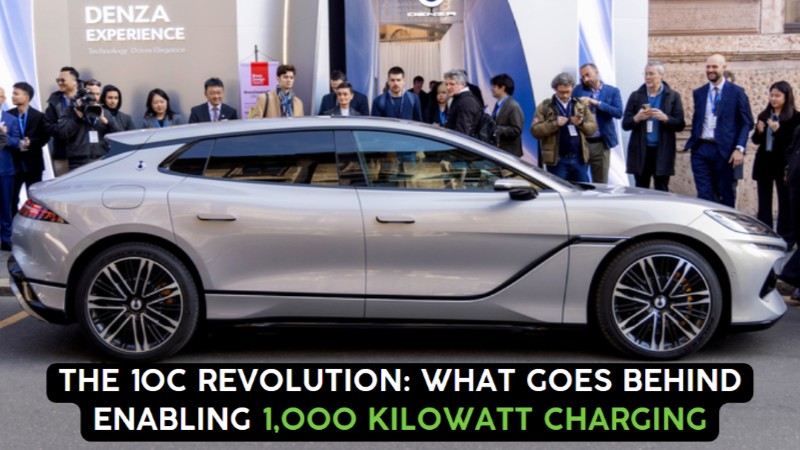
The 10C Revolution: What goes behind BYD’s 1,000 kW Charging

The automotive industry is witnessing a revolution in EV charging technology as BYD introduces its Super e-Platform, featuring a 1000V electrical architecture that enables megawatt charging, delivering a full charge in ~5 minutes. A critical technical driver of this speed is the new version of the Blade Battery, which can reach 10C charging speeds.


Diego Pareschi, Director – EV Charging at BYD Europe, is driving the deployment of BYD’s Flash Charging network. In this interview with EVreporter, he discusses the breakthrough that could end the debate over charging speed for good, as well as BYD’s roadmap for bringing this 5-minute charging reality to the European market.
Can you comment on BYD Super e-Platform and its 1000V architecture, which enables MW charging and full charge in ~5 minutes? What are BYD’s plans for introducing this technology and megawatt charging stations in Europe and China?
Globally, the EV charging technology has evolved quickly, moving from 400V to 800V. BYD is now pushing the bar to 1000V. This provides more power for the overall powertrain and requires smaller cables with less copper, which helps manage heat—the biggest problem during charging. This advancement is possible because of BYD’s full vertical integration; almost every component, down to the electronic boards, is manufactured internally rather than sourced from external suppliers.
No other company in the world comes close to this level of vertical integration.
The first vehicle to use this platform, the Denza Z9GT, will be introduced early this year, with more models following in Europe and other markets. While 1000V vehicles can use regular 800V chargers, they will be limited by the charging system and won’t reach top performance. We plan an ambitious rollout of Flash charging networks across Europe, Middle East, Africa, Central Asia, China, and Asia Pacific. The plans are an order of magnitude above any other current initiative.
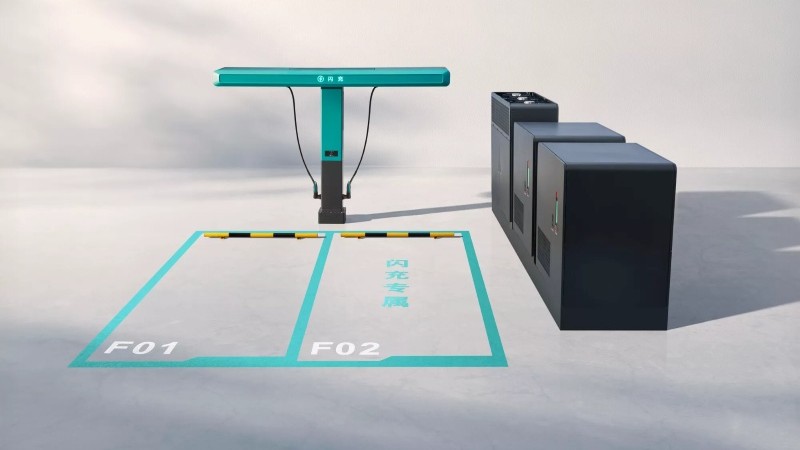
While the 1000V architecture allows for higher voltage and more motor torque, the real game-changer is the Blade Battery. The new version can reach 10C, meaning it can charge at ten times its capacity. For example, a 100kWh battery could reach a peak charging speed of 1,000 kilowatts. Because the Blade Battery design cools more efficiently, we can inject more energy without the battery overheating. This changes the paradigm: instead of spending 30 minutes at a charging station, users would need spend 5 to 7 minutes.
What connector will be used for flash charging? Is it the same as CCS?
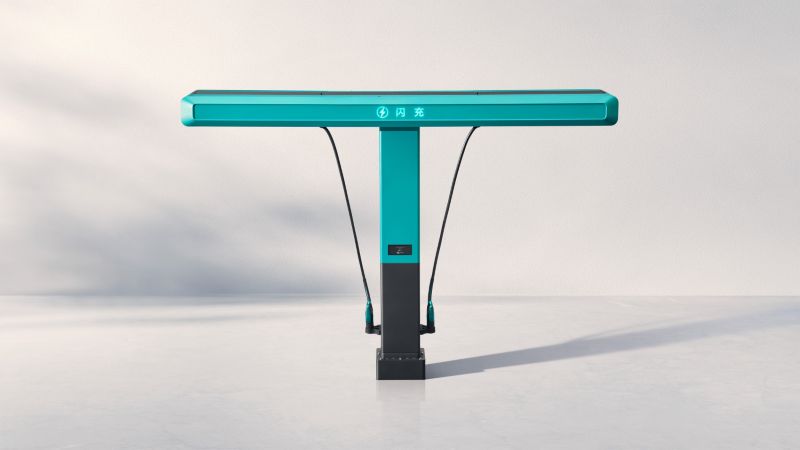
It is a standard CCS connector, liquid-cooled. The higher voltage means we don’t need to push excessive current, though we can leverage liquid-cooling technology from systems like MCS (Megawatt Charging System Protocol developed by Char.IN) for heavy vehicles that handle up to 1,500 amps.
The connector is a standard CCS plug—making the user experience easy and similar to existing rapid chargers.
Are you also considering dual-gun charging for the same car?
Dual charging was an early bridge technology used for buses with huge battery packs, but it was left behind when we introduced single-gun 1000kW charging in early 2025. Single-gun is more convenient for existing infrastructure and cable handling. We were able to push CCS limits by focusing on cooling the connection pins, which are typically the bottlenecks due to heat generation.
What kind of engagement do you need to have with regulatory bodies to ensure grid support for these charging speeds?
There is no need for grid-side regulatory changes because the system uses a standard 400V AC connection. Every flash charging system includes a BYD battery to store energy as a buffer, so we don’t need a powerful grid connection. We can rely on a modest 50kW to 200kW connection.
Every BYD flash charging system includes a battery pack to store energy as a buffer, so we don’t need a very powerful grid connection.
What would be impact of the reduction in ‘dwell time’ to 5–7 minutes on the physical footprint, site requirements, and rollout strategy for future charging infrastructure?
Currently, EV drivers must spend 25 to 30 minutes at a station, which requires large, high-amenity locations to accommodate the wait. However, BYD’s technology reduces this dwell time to 5-7 minutes. This rapid turnover allows for the development of significantly smaller charging stations with a reduced physical footprint. The implications for infrastructure include:
- Fewer Connectors: While typical high-speed sites, such as Tesla Superchargers, often require 16 plugs and massive parking areas, BYD’s flash charging model typically only needs two to four plugs because users do not remain stationary for long.
- Reduced Parking Requirements: Because it is less likely to have many simultaneous users, the need for extensive parking space is eliminated.
- Lower Investment in Amenities: With sessions lasting only a few minutes, there is less need for expensive facilities; stations can focus on basics like a washroom or a small kiosk.
- Grid Flexibility: By using integrated buffer batteries, these smaller stations can be deployed in rural areas with modest 50kW to 200kW connections, removing the need for costly grid or substation upgrades.
Ultimately, this efficiency allows for a fast and aggressive rollout of charging networks that resemble modern fuel stations—where drivers stop briefly, grab a snack, and continue their journey. Shorter charging times also make a lot of sense for fleets like Uber or taxi drivers because charging time is time they aren’t earning money.
What are some of the challenges to be ironed out in aggressive rollout of BYD flash charging network across Europe?
Unlike China, which operates under a single time zone, one government, and one regulatory system, the main challenge in Europe is the fragmented regulatory landscape across different countries.
While most European countries use the MID metering system, Germany requires Eichrecht, and there are even “different flavors” of these standards for Austria and the German-speaking part of Switzerland. However, BYD is working “full steam” with its 120,000 engineers and has hired industry experts to manage these large-scale rollouts. I’ll be able to share more about the scale and priorities of rolling out our flash charging network in due course later this year.
This interview was first published in EVreporter Mar 2026 magazine.
Also read: BYD introduces Blade Battery 2.0 and FLASH Charging technology
Subscribe & Stay Informed
Subscribe today for free and stay on top of latest developments in EV domain.