BYD introduces Blade Battery 2.0 and FLASH Charging technology

BYD has introduced FLASH Charging technology and the second generation of its Blade Battery. The company states that the charging system can deliver up to 1,500 kW through a single connector. According to the company, charging from 10% to 70% can take around five minutes, while 10% to 97% can take about nine minutes. Under low-temperature conditions of –30°C, charging from 20% to 97% can take around 12 minutes.
The Blade Battery 2.0 is reported to offer a 5% increase in energy density, enabling a driving range of over 1,000 km under the CLTC test cycle. BYD said the technologies were developed following research on factors affecting EV adoption, including charging time and battery range. The company noted that many EV buyers pay attention to battery capacity and driving range when selecting vehicles.
During a showcase in China, Wang Chuanfu said that improving charging speed and low-temperature charging performance is important for expanding EV adoption.
BYD said the second generation of the Blade Battery was developed over six years and forms the basis for its FLASH Charging system. The company stated that it increased energy density while enabling higher charging speeds. The battery uses an Ion Transport System consisting of three components:
- Flash-Release cathode, designed with a particle-size architecture for ion movement
- Flash-Flow electrolyte, optimised using AI to increase ionic conductivity
- Flash-Intercalate anode, designed to support lithium-ion intercalation
According to BYD, these components reduce internal resistance and heat generation. The anode design also includes electrode restructuring and graphite particle alignment intended to reduce lithium-ion transport resistance and support faster intercalation.
BYD stated that the battery uses a modified solid electrolyte interphase (SEI) layer designed to support ionic conductivity and chemical stability. The company added that the structure includes a self-repair mechanism.
In safety testing, BYD said the battery underwent simultaneous FLASH Charging and a nail-penetration test, with no thermal runaway, smoke, or fire reported after 500 charging cycles. The battery also underwent a thermal-runaway test after a forced short circuit of four cells, with no fire or explosion reported at temperatures above 700°C. The company added that the battery shows 2.5% lower capacity degradation compared with the first-generation Blade Battery.
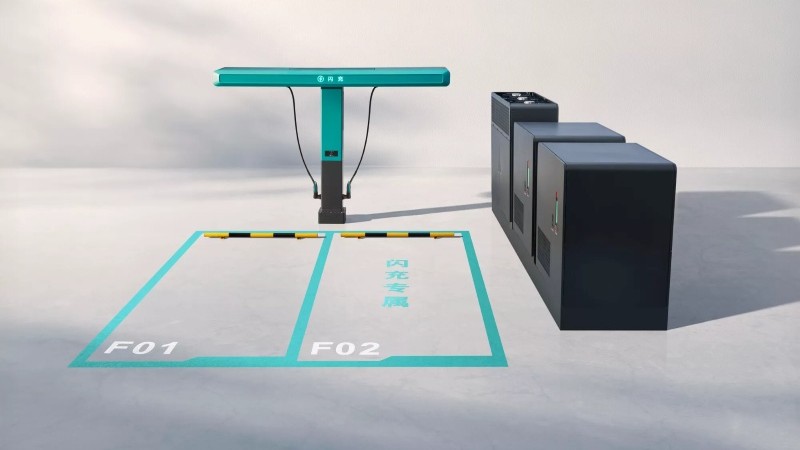
The FLASH Charger can deliver up to 1,500 kW through a single connector in the Chinese-market specification. The charger includes an overhead T-shaped structure designed to keep cables off the ground.
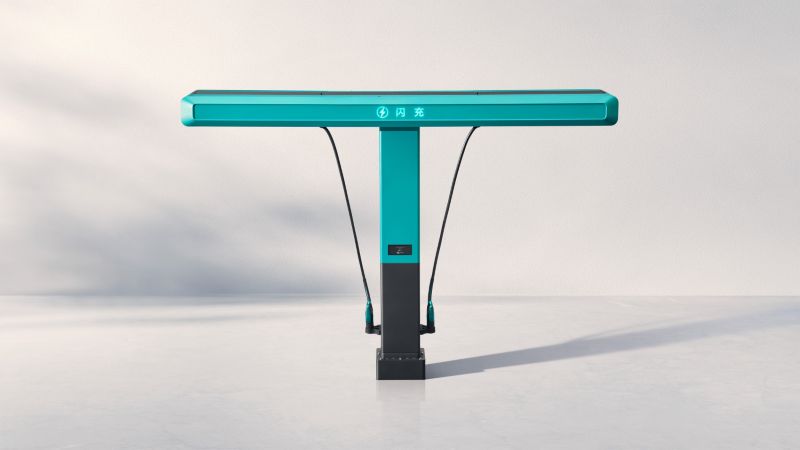
BYD reported that 4,239 FLASH Charging stations had been installed in China as of 5 March 2026. The company plans to expand the network to 20,000 stations by the end of 2026. Each station is paired with an energy storage system designed to support high-power charging and reduce grid load. The system uses a battery that stores energy and releases it during high-power charging sessions. The charger design includes a lighter connector and a cable system supported by a pulley and sliding rail, intended to allow easier connection regardless of the vehicle’s charging-port location.
The first vehicle equipped with FLASH Charging and Blade Battery 2.0 for the European market will be the Denza Z9GT. BYD said specifications for the European version will be released later.
The company stated that it plans to deploy FLASH Charging stations in international markets and will provide details on overseas rollout plans at a later stage.
Also read: BYD’s ultra-fast charging technology
Subscribe & Stay Informed
Subscribe today for free and stay on top of latest developments in EV domain.