Current State of Battery Material Manufacturing in India

EVreporter spoke with Kunal Daga, Founder & Director of MolSynth, to understand the current state of battery material manufacturing in India. We focused on companies currently leading India’s efforts in cathode active material (CAM), anode active material, and electrolyte salt manufacturing. Presenting an edited excerpt of the insights that emerged from the conversation. We believe it will be useful for anyone following India’s battery value chain.
LFP CAM Manufacturing in India
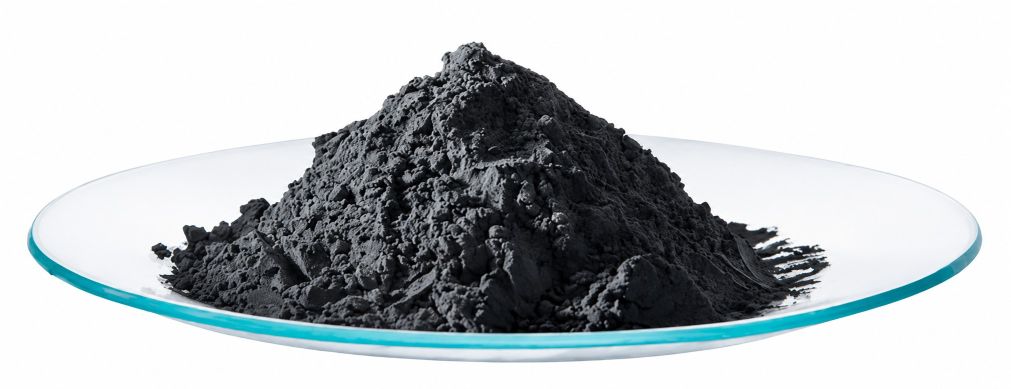
Two Indian companies stand out in LFP cathode today: GFCL EV and Epsilon Advanced Materials. Both have the technical depth to move to Gen 4, the higher compaction LFP grades now being specified by leading cell makers, which puts them in a different bracket from most new entrants.
GFCL EV
- Gujarat Fluorochemicals’ EV materials arm is building an integrated battery materials complex in Jolva, Gujarat. Its competitive edge comes from in-house hydrofluoric acid (HF) manufacturing.
- Has commissioned and stabilized its LFP CAM plant and received initial customer approvals on product samples. Final qualification is expected in the current FY 2026-27.
- Capable of reaching Gen 4 LFP. For LFP CAM production, the company is building a multi origin supply base for lithium carbonate and iron phosphate.
- Beyond CAM: its LiPF6 electrolyte salt is qualified with major global electrolyte makers, with commercial supply since December 2025; PVDF binders are in advanced qualification; and a natural graphite anode facility is planned. Together, GFCL aims to address close to 70% of the value of an LFP cell.
- Developing a greenfield battery materials project in Oman to take advantage of trade agreements with the United States and India.
GFCL EV’s execution owes much to Rajiv Rao on battery materials, and Vivek Singh and Kunal Sharma on cathode, who have brought the business from plan to qualified product in a remarkably short time, while Chirag Cheema has been pushing LiPF6 & Electrolytes hard with global electrolyte makers.
Epsilon Advanced Materials
- One of the very few Indian companies with capability across both electrodes: it is already a proven, commercial anode supplier to cell makers (see the anode section below) and is building a parallel cathode business.
- Its LFP cathode has entered validation with cell makers across Asia-Pacific, Europe and the US, according to public company announcements.
- Like GFCL EV, Epsilon is capable of achieving Gen 4 LFP. Its existing customer relationships on the anode side give it a shorter path into cell-maker qualification for cathode.
Behind this is the vision of Vikram Handa, who has built Epsilon into a genuinely integrated battery materials company, and Kalpesh Pandya, who leads the cathode effort.
Himadri Specialty Chemical
- Better known for carbon chemicals, Himadri has also announced plans for an LFP cathode facility in Odisha, making it one of the few Indian groups targeting both cathode and anode (see the anode section below).
- It is still earlier in its cathode journey than GFCL EV and Epsilon, but its carbon chemistry base, anode program and international battery investments make it one to watch.
NMC CAM Manufacturing in India
Lohum – Founded in 2018 and headquartered in Greater Noida, Uttar Pradesh, Lohum is primarily involved in lithium-ion battery recycling, repurposing, and refining to extract critical materials. It is also building NMC CAM capability in association with Greater Noida-based Vidyuta Materials.
Rubamin – Evaluating to produce NMC CAM for the domestic cell manufacturing market.
In NMC, Rajat Verma has built Lohum into one of India’s most recognised names in battery recycling and refining, while Bhuwan Purohit has been a steady voice for Rubamin’s move from metals refining into battery materials.
Electrolyte Salts Manufacturing in India
Neogen Chemicals
- Neogen, through its subsidiary Neogen Ionics, is one of the most serious Indian players in electrolyte salts, pushing strongly on both LiPF6 and LiFSI, the next-generation salt increasingly used to improve fast charging, low-temperature performance and cycle life.
- Its edge is its depth of Japanese partnerships. It has a registered presence in Japan, works with MU Ionic Solutions (MUIS) on electrolyte technology, and has more recently partnered with Morita Chemical Industries, one of Japan’s most experienced lithium salt makers, in a joint venture for LiPF6 in Gujarat.
- Those partnerships bring proven process know-how and credibility with global cell makers, which shortens the path to qualification for an Indian producer.
Much of this comes down to people. The vision and sincerity of Dr Harin Kanani set the tone, Anurag Surana’s network in Japan has been instrumental in building these partnerships, and Varun Mehta’s commitment carries them through. That long-term sincerity is what Japanese partners value most.
Anode Manufacturing in India
On anode, TACC and Epsilon are the two leaders, with Himadri close behind and moving
quickly from pilot to customer samples.
TACC Limited (The Advanced Carbons Company)
- A subsidiary of HEG and part of the LNJ Bhilwara Group, TACC is setting up a synthetic graphite anode active material plant in Dewas, Madhya Pradesh.
- The project is being built for commercial production from the outset rather than as a pilot, with operations expected to begin in 2027.
- Petroleum coke sourced from global refineries serves as the precursor.
- TACC is also exploring an anode active material collaboration with Panasonic Energy.
TACC is being led by Ankur Khaitan, with Dr Ravi Raj and Nikita Jain alongside him, building one of India’s first commercial synthetic graphite anode programmes with a clear focus on global-grade quality.
Epsilon Advanced Materials
- Already a commercial supplier of synthetic graphite anode material, with a track record of consistent supply that puts it ahead of most Indian peers on production readiness.
- Its anode track record with cell makers is the foundation for its push into LFP cathode.
On the anode side, Dr Natarajan Chinnasamy, Epsilon’s Chief Technology Officer, has been central to building Epsilon’s technical depth and its standing with cell makers.
Himadri Specialty Chemical
- Has already installed a pilot line for anode material in West Bengal.
- Is en route to supplying samples to prospective cell-maker clients, the first step in what is typically a long qualification cycle.
- Brings strong carbon and coal-tar chemistry know-how, which is directly relevant to anode precursor processing.
Himadri’s battery materials push is being driven by M.B. Gadgil and Amit Dutta, whose leadership has taken the anode programme from concept to customer sampling in quick time while laying the groundwork for cathode.
Low-hanging fruits in the battery component space that Indian firms can focus on
The low-hanging fruits are electrolyte solvents, electrolyte additives, and the many parts that go into cells and packs.
- Solvents: Carbonate solvents such as EC, DMC, EMC and DEC build directly on India’s established chemical industry, and the process know-how and feedstocks largely exist already.
- Additives: Additives such as VC and FEC are used in small volumes but carry high value, and specialty chemical makers are well placed to supply them.
- Cell and pack parts: Cans, caps and top covers, tabs, busbars, housings, connectors and thermal management parts can draw on India’s strong automotive component and precision engineering base.
These segments need less capital than active materials, have shorter qualification cycles, and can be supplied to both domestic and export customers. That makes them a practical place for Indian firms to build credibility with cell makers before moving up the value chain.
Challenges with Customer Qualification of Battery Materials
Qualification is the single biggest hurdle for a new material supplier, and it is often underestated. A cell maker is putting its product, its warranty and its customer relationships on the line, so it will not switch to a new material until it is fully confident of consistent performance at scale. Broadly, the journey runs in stages:
- Lab and coin-cell evaluation: basic physical and electrochemical properties, impurity profile and batch-to-batch consistency.
- Pilot and full-format cells: performance in the customer’s actual cell design, followed by cycle life, calendar life, temperature and safety testing, which can take many months.
- Plant and process audit: the customer audits the supplier’s quality systems, process controls and traceability, and locks the process.
- Trial orders and ramp-up: small commercial volumes first, then gradual scale-up as the supplier proves it can deliver consistently.
As a rough guide, solvents, additives and mechanical parts can typically be qualified in 6 to 12 months.
Active materials such as cathode and anode usually take 18 to 24 months or more with top-tier cell makers, and longer still when an automotive OEM program is involved.
Electrolyte salts and binders sit somewhere in between.
What many new entrants miss is that qualification never really ends. Any change to a plant, a process or even a raw material source can trigger requalification.
Indian CAM makers, for example, are now running parallel approvals on lithium carbonate from several origins so they are not dependent on a single supplier. Building that multisource, fully traceable supply chain from day one saves a great deal of time later.
Can Indian battery active material manufacturers match China’s prices?
- Not on their own, at least not in the near term. Indian producers today face a cost gap of roughly 30% against the large East Asian battery material makers. That gap comes from scale, mature supply chains for precursors and reagents, lower energy and capital costs, and years of process optimization.
- It is also important to recognize that the competition is no longer just China. Korean and Japanese producers are increasingly looking at markets beyond their traditional customers, and Indian cell makers will have credible non-Chinese alternatives to choose from. Indian material makers have to be competitive against all three.
The lesson from the cell PLI is instructive: media reports have highlighted missed milestones, approval bottlenecks and slow disbursement of incentives. A components scheme, reported to cover cathode and anode active materials, electrolytes, copper foil and separators, is now being discussed. This is where the PLI support for battery components, currently under discussion, can make a real difference, but only if it is executed properly.
The incentive needs to be large enough and long enough to bridge a meaningful part of that 30% gap through the qualification and scale-up years. Disbursement needs to be timely and predictable, and the eligibility criteria need to reward genuine domestic value addition rather than simple assembly. Done well, it gives Indian producers the runway to reach the scale at which they can compete on their own. Done poorly, it risks becoming another scheme with announced capacity but little actual output.
What are a few things about the battery materials market you wish more people had awareness of or understood better?
- Materials are where the value is: cathode, anode, electrolyte, separator and foils together make up the majority of a cell’s cost. Cell gigafactories get the headlines, but without a domestic materials base India will simply shift its import dependence from cells to materials.
- Raw material prices are volatile: lithium carbonate prices have swung several-fold in the last few years. Material makers need disciplined procurement, a mix of long-term contracts and spot buying, and some form of risk management, or price swings can wipe out their margins.
- Origin now matters as much as price: rules on foreign entities of concern and supply-chain traceability in export markets such as the US mean that where a material, and its precursors, come from can decide whether a cell can be sold there. This is an opportunity for Indian producers.
- The competition is global: Chinese, Korean and Japanese material makers are all actively evaluating India, both as a market and as a manufacturing base. Indian companies should see this as a chance to partner and learn, not only as a threat.
- Chemistry is not standing still: LFP keeps advancing through new generations, sodium-ion is emerging for storage and entry-level mobility, and suppliers who build flexible, upgradeable processes will be better placed than those that lock into a single specification.
Disclaimer
The information in this article is based on market sources, public announcements and industry conversations, and reflects the understanding at the time of writing. It has not been independently verified with the companies mentioned and may change. It is not investment, commercial or technical advice. Readers should exercise the utmost care and carry out their own independent verification before relying on any of this information or making business decisions based on it. Neither MolSynth nor the interviewee accepts liability for decisions taken on the basis of this article.
Mumbai-based MolSynth has developed reliable battery material supply chains across India, China, and Japan. The organization works with battery material companies to identify and procure the input materials needed to develop key cell components. MolSynth is bolstered by Daga Global, a chemical company with over forty years of experience.
This article was first published in EVreporter Nov 2026 magazine.
Also read: Bridging the Gap Between Battery Material Innovation and EV Performance
Subscribe & Stay Informed
Subscribe today for free and stay on top of latest developments in EV domain.