Assessing the entrepreneurship opportunity in the Indian electric vehicle charging space

The electric vehicle charging sector in India represents is compelling entrepreneurship opportunity. This is a sunrise sector with predictable growth, minimal regulatory hurdles, and the profound satisfaction of building a meaningful business.
This article is based on the inputs received from a leading Indian EV Charging Industry Expert.
The Sector: A Definitive Growth Story
Electric vehicles are game-changers. The driving experience is so superior that after experiencing an electric car, traditional vehicles feel outdated. The technology has arrived, and there’s no turning back. This isn’t a speculative trend; it’s an environmental and economic imperative. The EV charging ecosystem is currently on a definitive upward trajectory with only one direction to go: up.
Ideal Entrepreneur Profiles
Success in this space doesn’t require a specific background, but three categories of entrepreneurs are particularly well-positioned:
1. Land or Real Estate Owners – Builders, mall owners, or individuals with land parcels near homes or offices in any town size have a natural advantage. Land is the primary asset, and remarkably, no government licensing is required—simply install a charger and begin operations.
2. Retail Business Owners – Owners of independent coffee shops, roadside dhabas, furniture stores, or hardware shops with good locations can leverage existing customer traffic. While they may not own the land, they have access to it and can offer charging as an additional service to customers.
3. Technical Contractors – Building contractors, civil contractors, and electrical contractors already understand electricity systems, installation requirements, and uptime management. Their challenge is securing a suitable location, which they can lease. This is knowledge-driven entrepreneurship.
These three profiles—resource-driven (land), opportunity-driven (retail), and knowledge-based (technical)—represent the ideal entrants. Possessing one of these assets allows entrepreneurs to enter the market with marginal additional effort, borrowing complementary expertise as needed.
Critical Strategic Advice: Maintain Multiple Income Streams
A recommendation: do not make EV charging your only business. This is not a short-term, high-turnover venture. It’s infrastructure investing and success requires long-term commitment. It’s not realistic to sustain yourself on a single charger while waiting for customers. While a portfolio of 10-20 chargers can generate substantial income, until that scale is achieved, individual entrepreneurs need other revenue streams.
Vehicle adoption is accelerating, and eventually, a charging network can support retirement needs, but that day is not today. Currently, entrepreneurs must maintain additional income sources alongside this venture.
The PLUG Formula for Success
The path to profitability follows the PLUG framework: Place, Load, Utilization, and Governance.
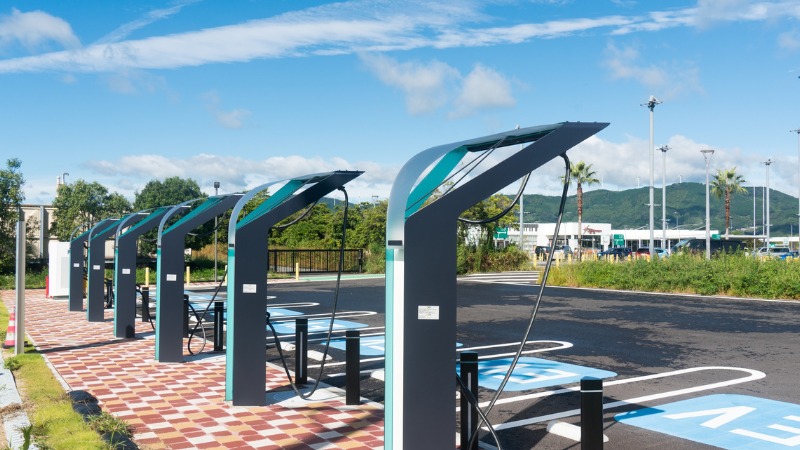
P – Place (The Non-Negotiable Factor) – Location evaluation must be rigorous and specific to charging use cases. Install chargers where users can spend their 30-45 minute charging time productively. A highway charger must offer seating, washrooms, food, and beverages. Safety is critical—drivers, especially women, cannot be expected to wait in isolated areas. Amenities transform the experience. A location offering food or snacks will outperform one that offers only a charger. The standard should include shopping, coffee, food—anything beyond the charger itself.
L – Load (Electrical Capacity Reality) – Load means electrical capacity, and this is where many plans collapse. A 50kW DC charger requires power equivalent to 10 residential houses—enough for a small building. Many locations lack this capacity, and power companies often reject applications, citing transformer limitations. This scenario is extremely common and represents a primary reason chargers fail to deploy. Verify adequate load availability before any other step, or all planning becomes meaningless.
U – Utilization (The Revenue Driver) – Utilization is the only metric that matters financially. Strategic location selection is crucial. Consider common travel corridors: Delhi-Chandigarh, Bangalore-Mysore, Mumbai-Pune, Chennai-Bangalore. Drivers don’t need chargers at journey start or end points—they need them at midpoints, approximately two hours in, when fatigue sets in and batteries have partially discharged. Locations like Murthal between Delhi and Chandigarh succeed because they combine charging with rest and food. A charger without utilization is a statue—admired but unused. Midpoint locations with amenities drive utlitization and actual revenue.
G – Governance (Discoverability and Reliability) – Governance has two critical components:
- Discoverability: Users find chargers exclusively through apps. Identify the dominant CPOs in your region and understand customer app preferences. Your charger must appear on the popular apps in your location. Large CPOs with extensive networks are safer bets, as interstate travellers rely on their consistent coverage.
- Uptime: The charger must always work. Uptime depends on both power and telecom network connectivity. Poor uptime is devastating. When a low-charge customer finds your charger non-functional, your reputation is permanently damaged. At that moment of anxiety, failure is unforgivable. Governance means maintaining near-perfect uptime through reliable power, strong network connectivity, and dependable hardware.
Partnerships with Charge Point Operators
The biggest challenge for the CPOs is securing good locations and capital for deployment. Entrepreneurs who provide both are essentially doing the heavy lifting. CPOs welcome such partnerships because entrepreneurs absorb the capex and location burdens. Multiple models exist: offer just the location, or work with CPOs who handle deployment and pay location fees. CPOs typically charge a commission—on a car charger billing ₹20-24 per unit, they might take ₹1-4, depending on location criticality and branding permissions.
Solar and Battery Storage: Feasibility for Entrepreneurs
Many EV charging entrepreneurs inquire about integrating solar panels and Battery Energy Storage Systems (BESS). The motivation is clear: addressing the argument that coal-powered electricity undermines EV environmental benefits. However, practical considerations vary dramatically by charger type:
- For Small AC Chargers (3-7kW): Solar integration works effectively. Rooftop solar can power these units effectively, reducing operating costs from ₹6-7 per unit (grid) to ₹3-4 per unit (solar). The trade-off is higher upfront capital, which delays profitability but reduces long-term expenses
- For DC Fast Chargers: BESS integration is impractical for entrepreneurs. A 50kW charger would require massive solar arrays and still couldn’t operate solely on solar power. This approach is better suited for large CPOs and corporations as a technology demonstration, not an ROI-positive investment for individual entrepreneurs.
Adding battery and solar capex pushes ROI timelines out by several years. This technology represents the future direction but isn’t currently optimized for typical entrepreneurship models.
Conclusion
The EV charging business offers an opportunity for entrepreneurs committed to long-term infrastructure investing. Success requires the right combination of resources—land, technical knowledge, or strategic location—plus disciplined attention to the PLUG framework: Place, Load, Utilisation, and Governance.
This is not a speculative short-term play but a strategic long-term venture. For those who approach it methodically, it can deliver both financial returns and the deep satisfaction of building a cleaner, more sustainable future.
This article was also published in EVreporter Feb 2026 magazine.
Also read: Building EV charging infrastructure for commercial and industrial vehicles
Subscribe & Stay Informed
Subscribe today for free and stay on top of latest developments in EV domain.